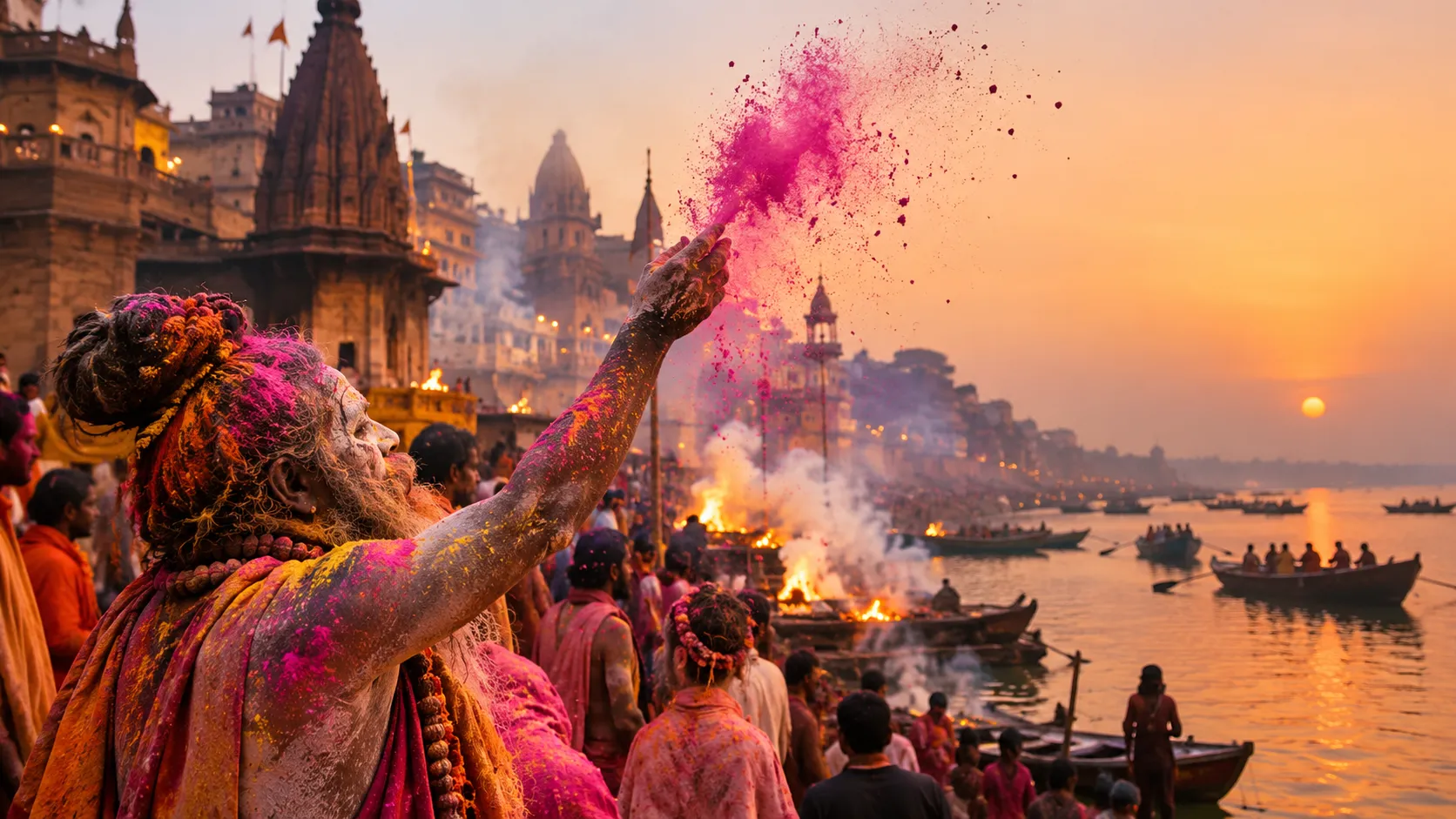
On the day after Rangbhari Ekadashi, devotees, sadhus and local Shiva followers gather at Varanasi's cremation ghats and smear ash from funeral pyres on one another instead of colour. That is Masan Holi in Varanasi, and in 2027 it falls a few days before the colour festival on 22 March. It is a religious observance rooted in the Kashi tradition of Shiva, death and letting go, which is why the way you attend matters as much as the date.
This guide is for travellers who want to witness it respectfully and plan the rest of a Holi trip around it. You will find the 2027 dates (and why calendars disagree), where and when the ritual happens, the etiquette that applies at Manikarnika Ghat, safety guidance for women and families, and a booking plan for Holi week.
Masan Holi 2027 Dates at a Glance
Holi 2027 (Rangwali Holi, the colour day) falls on Monday, 22 March, with Holika Dahan on the evening of Sunday, 21 March. Masan Holi comes earlier in the week, tied to Rangbhari Ekadashi, which is the same day as Amalaki Ekadashi. Panchang sources place that Ekadashi on Thursday, 18 March 2027.
| Event | Expected date (2027) | Where |
|---|---|---|
| Rangbhari Ekadashi | Thursday, 18 March | Kashi Vishwanath Temple |
| Masan Holi, first observance | Thursday, 18 March | Harishchandra Ghat |
| Masan Holi, main observance | Friday, 19 March | Manikarnika Ghat |
| Holika Dahan | Sunday, 21 March | Bonfires across the city |
| Rangwali Holi | Monday, 22 March | Assi Ghat, Dashashwamedh Ghat, old city |
Please treat the Masan Holi dates as expected, not fixed. Reports from earlier years show the pattern: in 2025, Rangbhari Ekadashi was on 10 March and Masan Holi on 11 March, and in 2026 most sources put Masan Holi on 28 February, though one reported 1 March. Some 2027 calendars list Masan Holi on 18 March, which matches the Harishchandra Ghat day above. The local Mahashmashan Nath committee and Kashi's priests usually confirm the schedule in the days before, so keep one flexible day in your plan.
What Is Masan Holi, and What It Is Not
Rangbhari Ekadashi marks Goddess Parvati's arrival in Kashi after her marriage to Shiva, and it opens Varanasi's Holi celebrations. Masan Holi follows a legend in which Shiva, after celebrating with Parvati, went to the cremation ground and played Holi with spirits and ascetics. Devotees use pyre ash as a reminder of mortality and of releasing ego and attachment.
It is not a tourist festival, and it is not a street party. The ritual takes place at working cremation ghats, where families are mourning while the observance goes on. Visitors are expected to watch quietly, while the ash play itself belongs to devotees, saints and local participants.
That framing shapes everything below. If you want colour, music and a party, Rangwali Holi on 22 March is the right day. If you want a window into Kashi's relationship with death, Masan Holi is that, and it asks for restraint.
Where and When Masan Holi Happens
Reports from recent years describe two ghats and two days. The first observance is at Harishchandra Ghat, usually on Rangbhari Ekadashi, and the main observance is at Manikarnika Ghat the next day. At Manikarnika, devotees assemble around the Mahashmashan Nath temple, begin with an aarti and offerings, and move to the ghat with drums and chants.
Start times are not consistent across reports. One 2026 account describes devotees gathering at dawn, while a 2025 account says the Manikarnika rituals began at around 10 AM. Our advice is to reach the old city early, confirm the start time with your hotel or guide the evening before, and plan on the ritual running through the morning.
Arrive early either way. The ghats fill quickly, and the lanes leading to Manikarnika are narrow.
Read more: Manikarnika Ghat Varanasi
Manikarnika Ghat Rules and Etiquette for Masan Holi
We did not find an official visitor rulebook for Masan Holi. What follows reflects widely reported norms and how we advise our own guests, so follow any instructions from police, ghat attendants or the temple committee on the day.
Photography
Do not photograph cremations at Manikarnika Ghat, and do not point a camera at mourners or pyres. Ask permission before photographing any person, including sadhus. If in doubt, keep the phone in your bag; the ritual does not need to be recorded to be remembered.
Participation
Watch, do not join the ash play unless a devotee explicitly invites you and you are comfortable. Never throw or smear ash on someone who has not agreed. Avoid anything that treats the ritual as entertainment.
Behaviour near the pyres
Keep your voice low, keep a respectful distance from pyres and mourning families, and do not block the paths used to carry bodies to the ghat. No alcohol, no loud music, no selfies in front of cremations. Treat it as a place of worship.
Dress and carry
Wear simple, modest clothing you do not mind getting dirty. Sandals are easier than shoes in a crowded ghat. Carry only what you need, with phone and wallet in a waterproof cover.
If you are new to Kashi's ghats, go with someone who knows the old city and this particular ghat.
Read more: Ghats in Varanasi
Safety Tips, Including for Women and Families
Large festival crowds in Varanasi's old lanes can turn rowdy, particularly on Rangwali Holi, and narrow lanes leave few exits. Reports from visitors describe unwanted contact and inconsistent policing during Holi. None of this is unique to Varanasi, but it is worth planning around.
For everyone:
- Travel in a group and stay in well-lit, open public areas rather than interior lanes.
- Arrange your return transport in advance, since roads clog during Holi.
- Keep valuables secure and carry a charged phone.
- Leave at the first sign of discomfort instead of waiting it out.
Women travelling alone or in small groups
Go in a group, stay near open ghats such as Assi where visibility is better, and return to your hotel by around midday on the colour day. Share your plan with someone and keep your hotel's number on you. If a situation feels wrong, move away and ask police or a shopkeeper for help.
Families, children and elders
For families with small children or elders, we suggest watching Masan Holi only if everyone is comfortable with an intense, crowded and emotionally heavy setting. A calmer choice is to attend the Rangbhari Ekadashi observances at Kashi Vishwanath, or to skip the ghat on the main morning and take the evening Ganga Aarti instead. Rangwali Holi is better enjoyed in the early hours at open ghats than in the lanes.
How to Plan Your Holi Week in Varanasi
Dates are spread across five days, so decide whether you want Masan Holi only or the full Holi week.
A 2-night plan for Masan Holi
Day 1 (arrive by 18 March): Check in, rest, and attend the Ganga Aarti at Dashashwamedh Ghat in the evening.
Day 2 (19 March, expected): Morning at Manikarnika Ghat for the main Masan Holi, with a guide or someone who knows the ghat. Afternoon rest, then temple visits and the evening aarti.
Day 3: Sunrise boat ride and Kashi Vishwanath darshan before departing.
A 5-night plan for the full Holi week
Add the Rangbhari Ekadashi observance on 18 March, the Holika Dahan bonfires on 21 March, and Rangwali Holi on 22 March, with a rest day built in between. Keep Assi Ghat for the colour day and head back by early afternoon.
Read more: Varanasi Trip Plan: How Many Days Do You Need
Our 3 Days Varanasi Tour Package starts from ₹3,999 per person (minimum six travellers) and covers a Varanasi stay with sightseeing, transfers and a guide. Holi week rates and availability can differ, so mention your dates when you enquire.
Booking Plan: Hotels and Trains for Holi 2027
Holi week fills early because Masan Holi, Rangbhari Ekadashi and Rangwali Holi all fall within five days. Planning guides for Varanasi's Holi suggest booking stays two to three months ahead, and one suggests four to six weeks for travel. For March 2027, that means deciding by January.
Indian Railways opens reserved tickets 60 days before the travel date at 8 AM. For travel on 18 March the window opens on 17 January, for 19 March on 18 January, and for 22 March on 21 January.
Stay near Assi, Godaulia or the ghats if you want to walk to the events at dawn. If you cannot get a room close to Manikarnika, choose one with easy road access and a reliable early-morning pickup, since the lanes around the ghat are not drivable. Holi falls at the point when the weather is getting warm, so keep outdoor hours to early morning and evening.
Read more: Best Time to Visit Varanasi
Plan Your Masan Holi Trip With Us
Share your dates, group size and who is travelling, and we will tell you honestly whether Masan Holi suits your group and how to plan around it. We can arrange stays, transfers and a guide who knows the ghats.
Planning Holi in Varanasi?
Tell us your dates and who is travelling.