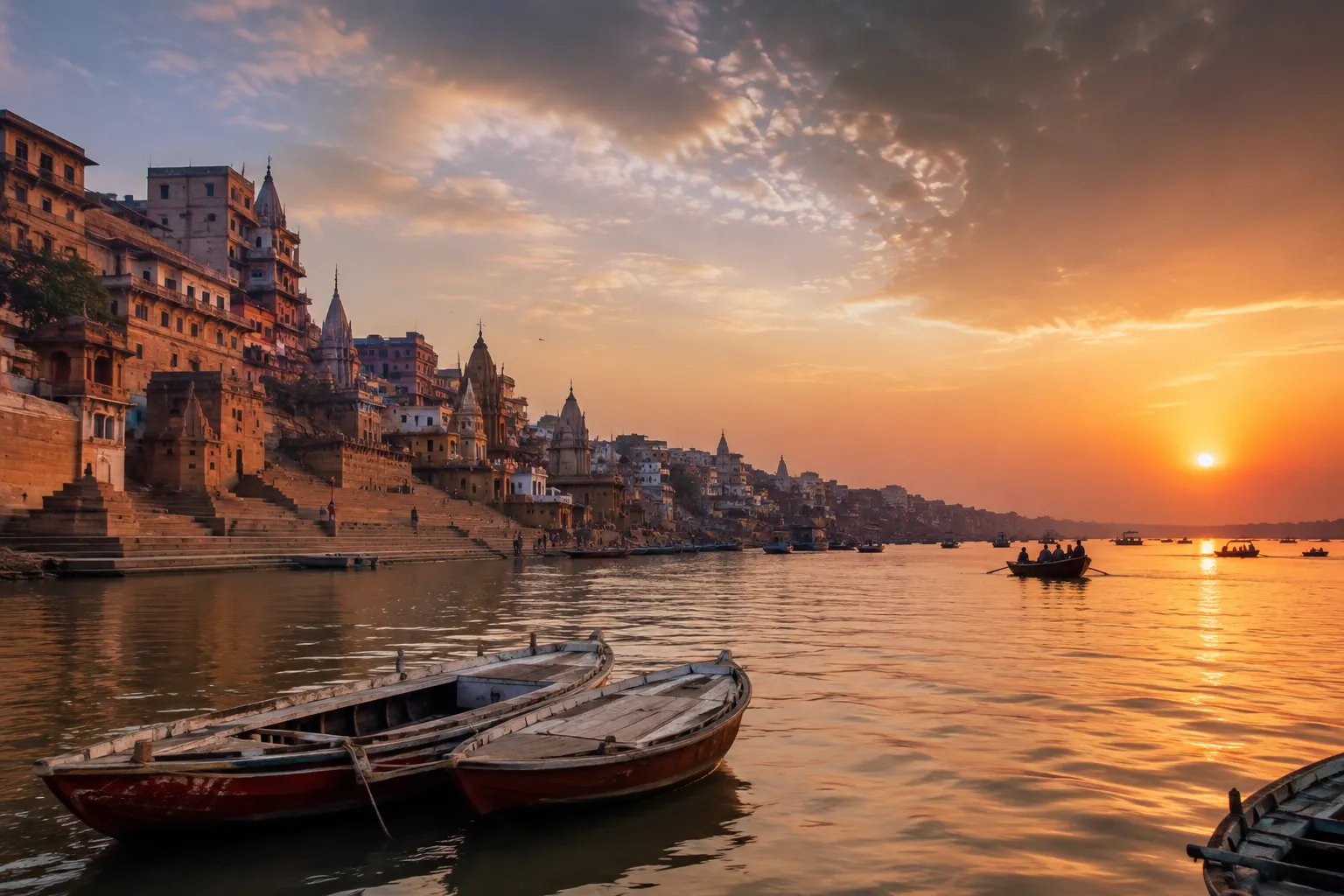
The moment before sunrise when the fog over the Ganga disappears and the ringing of the Kashi Vishwanath Temple bells begin is beautiful and serene. Boats float quietly on the river. There are people that have gathered on the steps of a ghat, one that has witnessed this same scene for 3000 years. Many people come from all points of the world to see this moment in Varanasi. Nothing can compare to this moment that the timing of a visit to Varanasi brings.
Varanasi is an overwhelming and complex, but astonishingly beautiful city. The city itself can be understood as a spiritual labyrinth and can be wholly evaluated based on the weather. The heat in the summer will keep you cooped up by 10 am. The cold will have you walking the ghats in the morning before they are fully awake, wrapped in a shawl, and blissfully watching the Ganga Aarti glow before the sunrise and through the mist. The variability of experience based on the season is very important to understand when planning the best travel dates for a visit.
If you already know your dates and just want a ready itinerary, you can browse our Varanasi tour packages built around the city's temple timings, aarti schedules, and seasonal crowd patterns. But if you are still asking yourself what is the best time to visit Varanasi, here is everything you actually need to know.
When Should You Visit Varanasi?
The best time to visit Varanasi is between October and March, with November to February being the ideal window. This also holds true if you are looking specifically for the best time to visit Kashi Varanasi, since Kashi is simply the older, spiritual name for the same city. This is when the weather is cool enough to comfortably explore the ghats, attend the sunrise boat ride, and stand through the evening Ganga Aarti without struggling with heat or humidity.
Now let us break that down properly, because "October to March" is a big window, and each part of it feels different.
Varanasi Weather Month by Month
Winter (November to February): The Best Time Overall
This is peak season, and for good reason. Mornings are foggy and cool, days are pleasant, and evenings are crisp enough for a shawl at the aarti.
- Temperature range: roughly 5°C to 20°C, with January being the coldest month
- Best for: sunrise boat rides, walking tours of the ghats, Ganga Aarti, photography
- What to expect: thick morning mist over the river (beautiful for photos, but boat rides can start slightly later some mornings), clear skies by mid-morning, cold evenings
- Downside: this is also the busiest season. Hotels near the ghats fill up fast, especially around Diwali, Dev Deepawali, and New Year, and prices go up accordingly
If you want the classic postcard version of Varanasi, the golden light hitting the ghats at 6 am, the smoke from the aarti lamps rising into cool air, this is your season.
Spring and Early Summer (April to June): Hot, But Culturally Rich
April starts warming up quickly and by May, Varanasi is properly hot. This is not the season for long walks, but it is the season for two of India's most important festivals.
-
Temperature range: 30°C in April, climbing to 40°C+ by May and June
-
Best for: Holi and Maha Shivratri, budget travel, fewer tourists
-
What to expect: intense heat from late morning to evening, so sightseeing needs to happen early morning or after sunset
-
Upside: hotel prices drop noticeably, and if you can handle the heat, you get a much more authentic, less crowded city
Maha Shivratri, Lord Shiva's night of worship, is one of the most spiritually charged times to be in Kashi, since the entire city is considered Shiva's own home. If your trip is about devotion rather than comfort, this season has its own pull.
Monsoon (July to September): Underrated and Overlooked
Most guides skip this season entirely, but it deserves a real mention because it changes the character of the city completely.
- Temperature range: 26°C to 35°C, humid with regular rainfall
- Best for: photographers who want dramatic river views, travelers avoiding crowds, budget stays
- What to expect: the Ganga swells and rises significantly, sometimes submerging the lower steps of the ghats entirely. Some ghat level activities get restricted during heavy flow
- Downside: narrow lanes can get slippery, and boat rides are sometimes paused when the river current is too strong
The river during monsoon is a sight in itself. It moves fast, it is wide, and it completely changes how the ghats look compared to their dry winter appearance. Not the easiest season logistically, but genuinely underrated if timed around a lighter rain spell.
Best Time for Ganga Aarti
The Ganga Aarti at Dashashwamedh Ghat happens every single evening of the year, so technically there is no bad time to see it. But the experience shifts a lot by season.
- Winter evenings give you the most atmospheric version, with the fire and smoke visible against cool air
- Summer evenings are still worth attending since the heat drops noticeably after sunset
- Festival evenings, especially Dev Deepawali, turn the aarti into a much larger, more elaborate ceremony with thousands of extra lamps lit along the ghats
If seeing the aarti is your main reason to visit, aim for winter for comfort, or plan around Dev Deepawali for scale and spectacle.
Best Time for a Sunrise Boat Ride
This is one of the most recommended things to do in Varanasi, and timing genuinely changes the outcome.
- October to February gives you the calmest water and the most dramatic light, though winter fog can occasionally delay early departures by 20 to 30 minutes
- March to June still works well, and the water is clear since the monsoon has not started
- July to September is the trickiest window, since strong currents can lead to shorter routes or occasional cancellations
For first time visitors, winter mornings remain the safest and most rewarding choice.
Festivals Worth Planning Your Trip Around
Varanasi's calendar is full of religious events, but a few genuinely change the entire feel of the city and are worth building your dates around.
- Maha Shivratri with usually falls in February or March and is one of the most important nights in the city, since Varanasi is considered Shiva's abode
- Holi with celebrated with real intensity in the old city lanes, especially around Manikarnika Ghat
- Dev Deepawali with falls fifteen days after Diwali, typically in November, and is when the ghats are lit with over a million earthen lamps. This is arguably the single most spectacular night to be in Varanasi, but hotel rates rise sharply and rooms near the ghats sell out weeks in advance
If your travel dates are flexible, timing your trip around Dev Deepawali is one of the best decisions you can make, just book your stay early.
People often search separately for the best time to visit Kashi Varanasi during festival season, and the answer stays the same either way, winter still wins for comfort, while Maha Shivratri and Dev Deepawali are the two dates worth building a special trip around.
Quick Comparison: Choosing Your Season
Want comfortable weather and the classic Varanasi experience?
Go between November and February
Want lower prices and do not mind heat?
Go in April or May
Want to witness Holi or Maha Shivratri?
Go in February or March
Want a dramatic, less crowded river view?
Go in the early monsoon, around July
Want the single most spectacular night of the year?
Plan around Dev Deepawali in November
A Local Note Before You Book
If you want a good experience in Varanasi, you can't rush your planning. Festivals change temple visiting times, the boats operate when the river is ready, and the best guesthouses get fully booked in the winter. If you're planning around a festival or the cool months, consider booking your hotels and boats in advance. It also helps to have a clear varanasi trip cost in mind beforehand, so you know what to expect before finalizing your dates.
This is our specialty. Our Varanasi tours accommodate the city's natural rhythm with aarti, temple lines, and seasonal weather, providing you with a plan when you arrive. We have adventures planned from 2-days to 7-days and from the calm, winter months to the chaotic, festival months.
Varanasi's welcoming nature to pilgrims and travelers has existed for thousands of years. It is a timeless destination. If you prefer to travel when Varanasi is at its best with pleasant, not sweltering, days and cool evenings, you should book your winter plans early.