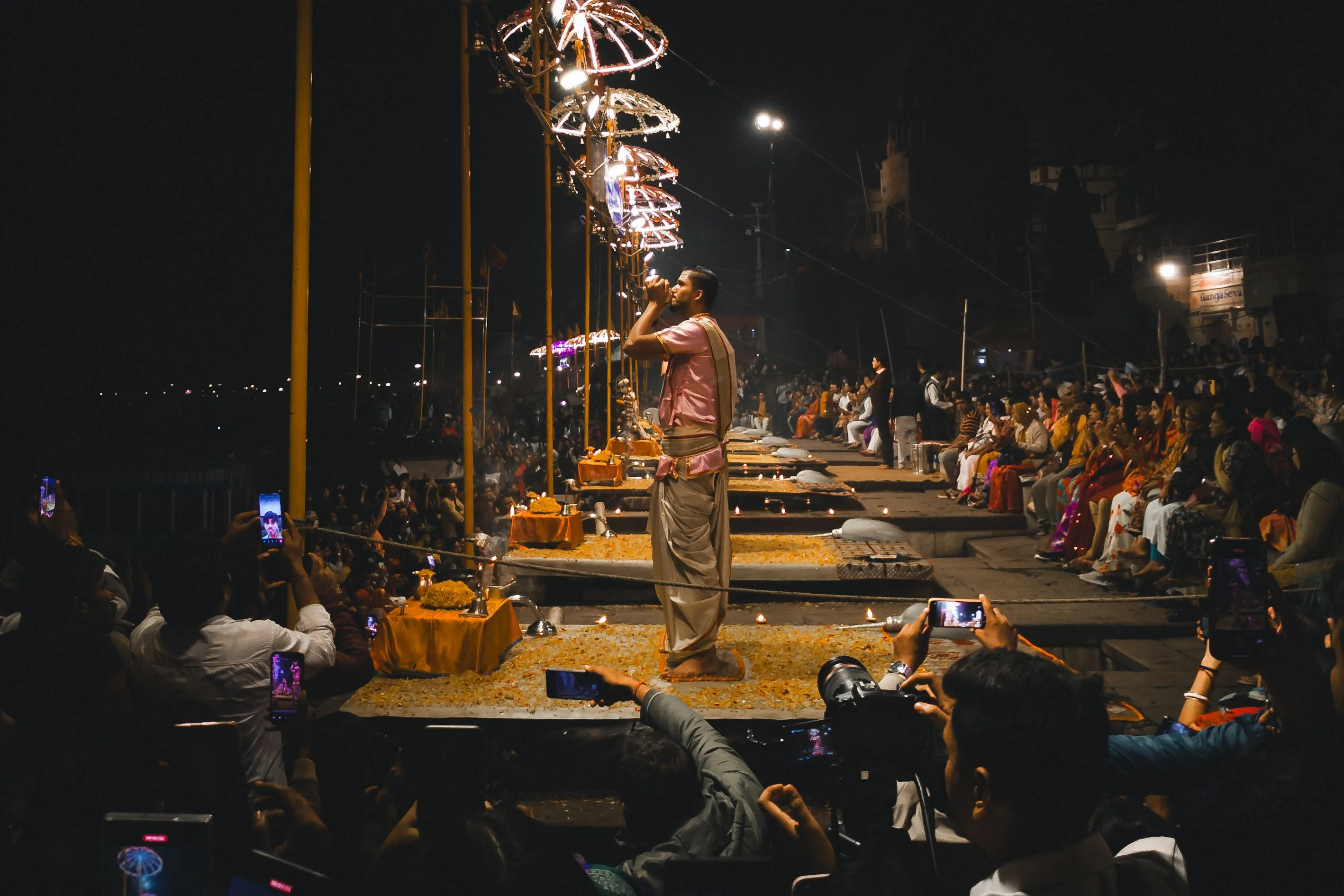
Kartik started today in North India, and Varanasi is changing with it. Over the next four weeks, the ghats fill before sunrise with bathers, lamps rise on bamboo poles above the river, and the city builds towards Dev Deepawali on 24 November. Many travellers visit only for the final night. But the whole month is worth knowing about, especially if you want a calmer, more ritual-rich visit.
This guide explains what Kartik means in Varanasi, where to see each tradition, and how to plan around the dates. If you want help with stays, boats and transfers, see our Varanasi tour packages or our dedicated Dev Deepawali package page for the main night.
Kartik 2026 at a Glance
- Month dates: 27 October to 24 November 2026 (North Indian calendar).
- Closing night: Kartik Purnima on 24 November, celebrated in Varanasi as Dev Deepawali.
- Why dates feel late this year: An extra lunar month this year pushed the autumn festivals about three weeks later than in 2025.
- Best known for: Dawn Ganga baths, deep daan (lamp offerings), Tulsi worship and the end of Chaturmas.
What Is Kartik and Why Does It Matter in Varanasi?
Kartik is considered the most sacred of the twelve Hindu months. Tradition holds that Vishnu wakes from his four-month sleep on Dev Uthani Ekadashi, which falls on 20 November this year. That ends Chaturmas and reopens the wedding season.
Varanasi adds its own layer. On Kartik Purnima, local belief says the gods descend to bathe in the Ganga, and the city welcomes them with lakhs of lamps. The month before that night is a long build-up, and much of it happens quietly at the ghats.
The Four Kartik Traditions You Can See in Varanasi
1. Kartik Snan: The Dawn Bath
Kartik snan is a bath taken before sunrise through the month, ending on Kartik Purnima. Pilgrims arrive in the dark, bathe, offer water to the rising sun and light a small lamp. On Kartik Purnima itself, crowds are known to gather at the ghats as early as 3 AM.
What visitors should know:
- Mornings in late autumn are cool, and the water is cold.
- Bathe only at the usual bathing areas, stay in shallow water and avoid going alone.
- Steps can be slippery, so wear sandals with grip.
- Anyone with a health condition, elderly travellers and young children should check with a doctor before a cold-water bath, since the tradition itself exempts them.
2. Akashdeep: Lamps in the Sky
Throughout Kartik, lamps in cane baskets are raised on tall bamboo poles above the riverbank. This is called akashdeep, the “sky lamp”. The custom is traditionally said to guide departed souls. Panchganga Ghat is one of the best-known places to see it, and the northern stretch has a more traditional mood than the busy central ghats.
Best time to see it: Around dusk, when the lamps are lit and the light on the water turns gold.
3. Deep Daan: Offering a Lamp
Deep daan means offering a lit lamp. In Varanasi, you will see people:
- Lighting a diya at the Tulsi plant in their homes each evening
- Floating small lamps on leaf boats on the Ganga
- Placing lamps on the ghat steps and at temples
If you take part, buy from regular vendors, keep flames away from clothing and take any leftover leaf boats and packaging with you.
4. Tulsi Worship and Tulsi Vivah
Tulsi is worshipped daily in Kartik and ceremonially married to Vishnu on 21 November, the day after Dev Uthani Ekadashi. Temples and riverside courtyards celebrate this with a sugarcane mandap and wedding songs. It is a good chance to see a living household ritual.
A Local Highlight: Nag Nathaiya at Tulsi Ghat
One of the city’s most distinctive events falls inside Kartik and is easy to miss. Nag Nathaiya is held on Kartik Shukla Chaturthi, which falls on Friday, 13 November 2026. It re-enacts Krishna’s victory over the serpent Kaliya.
- Where: Tulsi Ghat, in the southern part of the city.
- What happens: A large kadamba tree branch is planted at the water’s edge, and a boy playing Krishna is shown dancing on the river as the story is staged.
- Who watches: Crowds line the ghat and boats. The titular Kashi Naresh traditionally views the leela from a royal boat.
- History: Local tradition credits the poet-saint Tulsidas with starting it in the 16th century.
Nag Nathaiya is also the first day of Chhath Puja this year, so expect the south ghats and approach roads to be busy. For the ghat itself, see our Tulsi Ghat guide.
Kartik 2026 Dates for Visitors
| Date | What happens in Varanasi |
|---|---|
| 27 Oct to 12 Nov | Dawn snan, akashdeep at Panchganga, quieter ghats |
| 8 Nov | Diwali |
| 13 Nov | Nag Nathaiya at Tulsi Ghat; Chhath begins |
| 15 Nov | Main evening offering of Chhath |
| 20 Nov | Dev Uthani Ekadashi; wedding season opens |
| 21 Nov | Tulsi Vivah |
| 24 Nov | Kartik Purnima and Dev Deepawali |
Dates can shift by a day with the local panchang, and some calendars place Dev Uthani Ekadashi on 21 November, so confirm closer to the time.
The Grand Finale: Dev Deepawali on 24 November
On Kartik Purnima, the ghats are lit from the southern end to Rajghat. The lamp tradition at Dashashwamedh Ghat is said to have been started in 1991 by Pandit Kishori Raman Dubey, known as Babu Maharaj. At Panchganga Ghat, stone lamp pillars are lit on this night.
Here is how to plan the day:
- Before dawn: The last Kartik snan of the month.
- Daytime: Temple visits, rest and a light lunch.
- Late afternoon: Move to your boarding point. Vehicle access narrows before dusk.
- At sunset: Lamps are lit across the ghats.
- Evening: Grand Ganga Aarti, then a boat ride to see the full line of lights.
Rooms and boats near the main ghats sell out quickly, so book early. Our Dev Deepawali package page lists current options, from evening-only boat packages to multi-day stays.
When Should You Visit During Kartik?
Choose a quiet week
Visit between 27 October and 12 November, or between 17 and 19 November. You get dawn snan scenes and akashdeep with fewer crowds.
Choose a cultural week
Visit on 13 November for Nag Nathaiya, or on 21 November for Tulsi Vivah.
Choose the grand night
Visit on 24 November, but book weeks ahead and plan to walk.
Practical Tips for a Kartik Visit
- Pack layers. Mornings by the river are cool, and November evenings drop further. Our Varanasi weather in November guide helps you pack.
- Start early. The best light and calmest ghats are before 7 AM.
- Respect the rituals. Do not photograph people bathing or praying without asking.
- Stay near the ghats. Walking is often faster than driving in festival weeks.
- Carry minimal belongings. Crowds rise sharply around festival dates.
- Keep your plans flexible. Dates and timings can shift with the panchang and crowd management.
Conclusion
Kartik shows a side of Varanasi that a single-night visit cannot. The dawn baths, the lamps on poles and the staged story at Tulsi Ghat all lead up to the lights of Dev Deepawali. Choose the week that suits your pace, book early for the final night and carry warm layers.