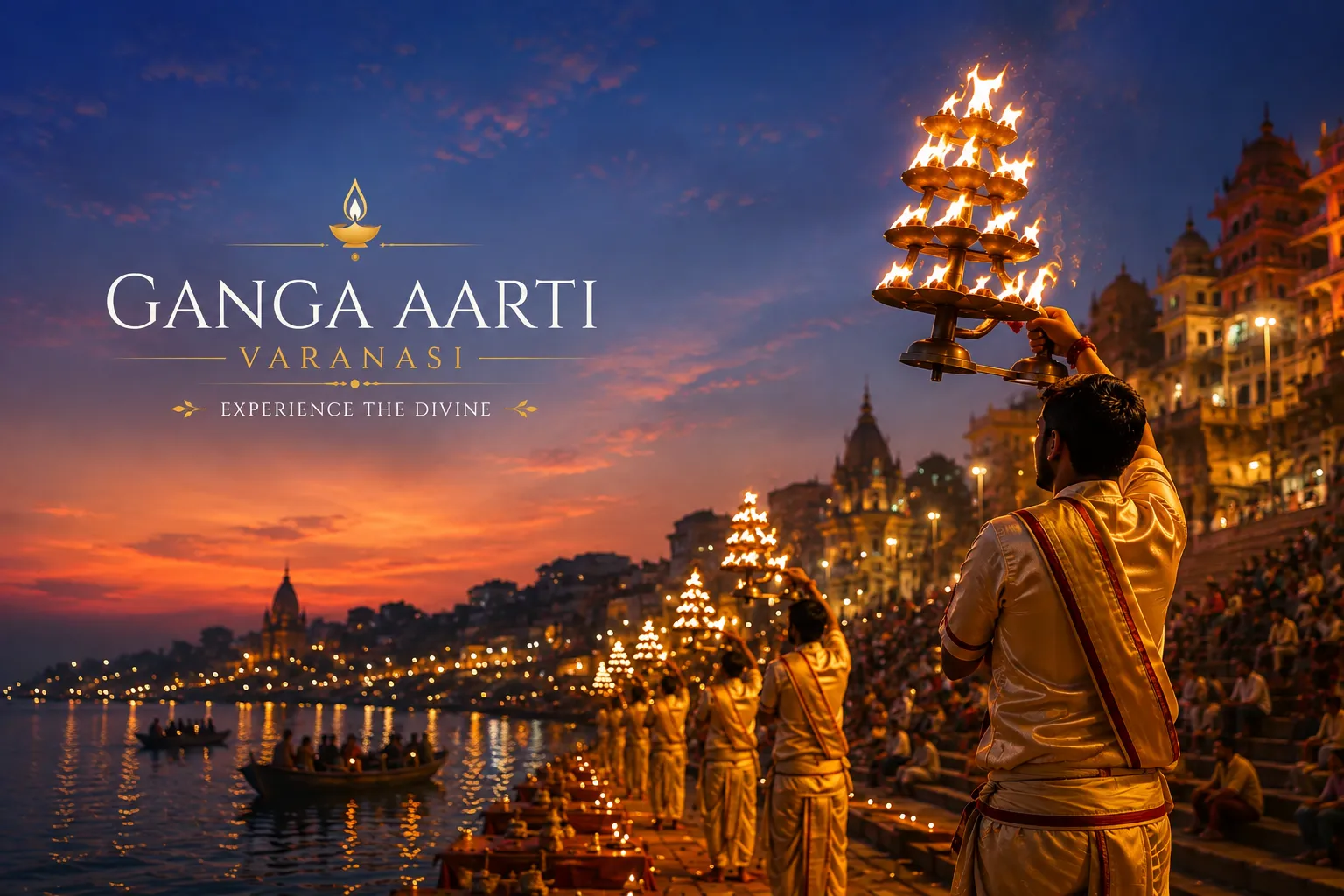
If you have typed "ganga aarti time in varanasi" into Google at least three times this week, trust me, you are not alone. It is the single most asked question by anyone planning a Varanasi trip, and honestly, it should be. The Ganga Aarti is not just an event you attend. It is the moment most people remember for the rest of their lives, long after the flights home and the souvenirs have found their place on a shelf.
I have lived around these ghats long enough to know that the timing question is trickier than it looks. It is not a fixed clock time like a movie show. It moves with the sun, changes with the season, and shifts a little every single evening. So in this guide, I am going to walk you through it the way I would explain it to a friend visiting Banaras for the first time, no confusing jargon, just the real, current, honest timings and everything around them.
Before we go further, if you are still figuring out your Varanasi trip and want someone local to help you plan it properly, just say hi to us here, we would genuinely love to help you plan a trip that does not feel rushed or touristy: say hello to our team
What Exactly Is the Ganga Aarti
The Ganga Aarti is a fire ritual performed on the banks of the river Ganga to honour her as a living goddess. At Dashashwamedh Ghat, seven priests stand on a raised platform every single evening and perform a synchronised ceremony with large brass lamps, incense, conch shells and bells, all in perfect rhythm with each other. It is loud, warm, smoky and strangely peaceful at the same time. Thousands of people gather on the steps and on boats floating on the river to watch it happen, and it has continued without a single day's break for generations.
Evening Ganga Aarti Timing at Dashashwamedh Ghat
This is the big one, the one everyone comes for. Since the aarti begins around sunset and not at a fixed hour, the timing naturally shifts through the year.
- Winter months, October to March: around 5:45 PM
- Summer months, April to June: around 6:45 PM to 7:00 PM
- Monsoon months, July to September: around 6:30 PM to 7:00 PM, though this can shift by 15 to 20 minutes depending on the river level
The ceremony itself runs for roughly 45 minutes, and the priests usually start preparing the lamps, conch shells and offerings about 30 to 45 minutes before the actual aarti begins. So if the aarti "starts" at 6:45 PM, the setup and the smaller rituals before it are already worth watching from 6:00 PM onward.
One thing most guides do not tell you clearly enough is that the exact minute can move by 10 to 15 minutes on any given evening depending on sunset that day, festival calendar, or even river conditions during monsoon. If your trip date is close, it is always smarter to confirm the same day timing through your hotel, a local guide, or simply message us and we will tell you the exact confirmed time for your dates.
Morning Ganga Aarti: The One Most Tourists Never See
Here is something that genuinely surprises most first time visitors. There is also a morning Ganga Aarti, and locals will quietly tell you it is even more beautiful than the evening one, mostly because there is no crowd pushing against you.
This happens at Assi Ghat as part of a program called Subah-e-Banaras, which literally means "Morning of Banaras." It usually begins around 5:00 AM in summer and closer to 5:30 AM in winter, right as the sky is turning that soft grey blue before sunrise. It is a gentle mix of Vedic chants, a small fire ritual, classical music playing softly in the background, and an open yoga session that anyone can join, tourists included. After the aarti, people usually stay back for the music and yoga, so the whole experience can stretch to almost two hours if you let it.
A smaller morning aarti also takes place at Dashashwamedh Ghat, but it is quieter and far less elaborate compared to Assi Ghat's version, so if you have to pick one morning aarti to witness, Assi Ghat is the one locals recommend.
Month Wise Timing Snapshot
To make things simple, here is roughly how the evening aarti timing shifts across the year:
- January and February: around 5:45 PM to 6:00 PM
- March: around 6:15 PM
- April and May: around 6:45 PM to 7:00 PM
- June: around 7:00 PM
- July, August, September: around 6:30 PM to 7:00 PM, weather dependent
- October: around 6:00 PM
- November and December: around 5:30 PM to 5:45 PM
Keep in mind these are approximate windows based on sunset patterns, not government issued fixed times, so always leave yourself a buffer of 15 to 20 minutes on either side.
Where Should You Watch It From
This is where your experience really changes depending on the choice you make.
Watching from the ghat steps is the classic, most common way. You sit shoulder to shoulder with pilgrims, families and fellow travellers, and the energy of the crowd genuinely adds something to the whole experience. The downside is that if you arrive late, you end up watching from far behind, and photography becomes difficult with so many phones and heads in the way.
Watching from a boat on the river is, in my honest opinion, the better experience if you want an unobstructed view of all seven priests at once, along with the reflection of the flames dancing on the water. It is calmer, less crowded, and honestly quite romantic if you are visiting with a partner.
If you are trying to fit the aarti into a short trip along with other major sights, our 2 day Varanasi itinerary has a practical breakdown of what to see before and after the evening ceremony without feeling rushed.
Other Ghats Where Aarti Happens Too
Most people assume Dashashwamedh is the only place to watch the Ganga Aarti, but that is not true. It is just the biggest and most famous one, so naturally it gets all the attention. If you know where to look, Varanasi has a few quieter spots too, and honestly, some travellers end up liking these more than the main event.
Panchganga Ghat
Panchganga Ghat is a good pick if the crowd at Dashashwamedh feels like too much for you. The aarti here is smaller and much calmer, no pushing, no scramble for a good step to sit on. You can actually sit still, take it slow, and watch the flames without a hundred phone screens blocking your view. It will not have the same scale or the synchronised seven priest formation, but if peace matters more to you than spectacle, this is where you go.
Kedar Ghat
Kedar Ghat is the one to pick if you want to feel like a local rather than a tourist. This ghat is used more by Varanasi residents for their daily rituals, so the aarti here feels personal and unfiltered, almost like you have been let into someone's evening routine rather than watching a show. There are barely any tour groups around, so you will mostly be sitting among people who live here, which is a completely different kind of experience.
So here is the simple way to decide. Want the big, dramatic, iconic Ganga Aarti experience, go to Dashashwamedh. Want to avoid the crowd, head to Panchganga Ghat. Want to experience it the way locals do, spend your evening at Kedar Ghat. There is no wrong choice here, it really just depends on what kind of evening you are looking for.
Getting to the Ghat on Time
No vehicle can drive right up to Dashashwamedh Ghat because of the narrow lanes around Godowlia market, so the last 10 to 15 minutes of your journey will always be on foot. From Godowlia Chowk, it is roughly a 10 minute walk through the market lane, and honestly, just following the crowd in the evening will lead you straight there since everyone is headed the same way.
If you are coming from the airport or from outside the city and are unsure about the best way to reach Varanasi itself, our detailed guide on how to reach Varanasi covers flights, trains and road options in one place.
Practical Tips From Someone Who Has Watched This a Hundred Times
Arrive at least 45 minutes early if you want a good seat on the steps, and closer to 60 to 90 minutes early during peak season, which runs roughly from November to February. During this window, the ghat fills up fast and the local police sometimes restrict entry once it gets too crowded for safety.
Carry very little with you. Pickpockets are rare but crowds are dense, so a small bag or nothing at all works best. Wear something comfortable since you will be sitting on stone steps, and if you plan to sit through the whole thing, a light shawl helps once the evening breeze picks up off the river, especially in winter.
If you get hungry before or after the ceremony, the lanes around Dashashwamedh Ghat are full of small stalls and old family run eateries serving everything from kachori sabzi to hot malaiyo in winter.
And if the evening puts you in the mood to pick up a little something to take home, brass diyas, silk and small religious souvenirs are easy to find in the market lanes nearby.
Planning Your Trip Around the Aarti
If the Ganga Aarti is the main reason for your trip, it genuinely helps to plan your dates around it rather than fitting it in as an afterthought. Aarti nights during Dev Deepawali or Ganga Dussehra are on a completely different level, so if your dates are flexible, our best time to visit Varanasi guide breaks down which months offer the most pleasant weather along with the festival calendar worth planning around.
Quick Guide to Varanasi Ghats
Does the Ganga Aarti happen every single day?
Yes, without exception, all 365 days including festivals, monsoon and public holidays.
Do you need a ticket to watch it?
Watching from the ghat steps is completely free. Only a private boat viewing needs to be arranged in advance.
How long does it last?
Around 45 minutes from start to finish.
Is the morning aarti worth waking up early for?
If you enjoy quieter, more intimate experiences without the evening crowd, yes, it is honestly worth the early alarm.
Conclusion
The Ganga Aarti is one of those experiences where knowing the right time matters just as much as being there itself. Get the timing right, arrive with a little patience, and let the evening unfold around you. And if you would rather not juggle timings, boats and seating spots on your own, our team knows these ghats better than most, and we are always happy to plan your entire evening around it. You can browse our Varanasi travel packages or simply drop us a message and we will take it from there.