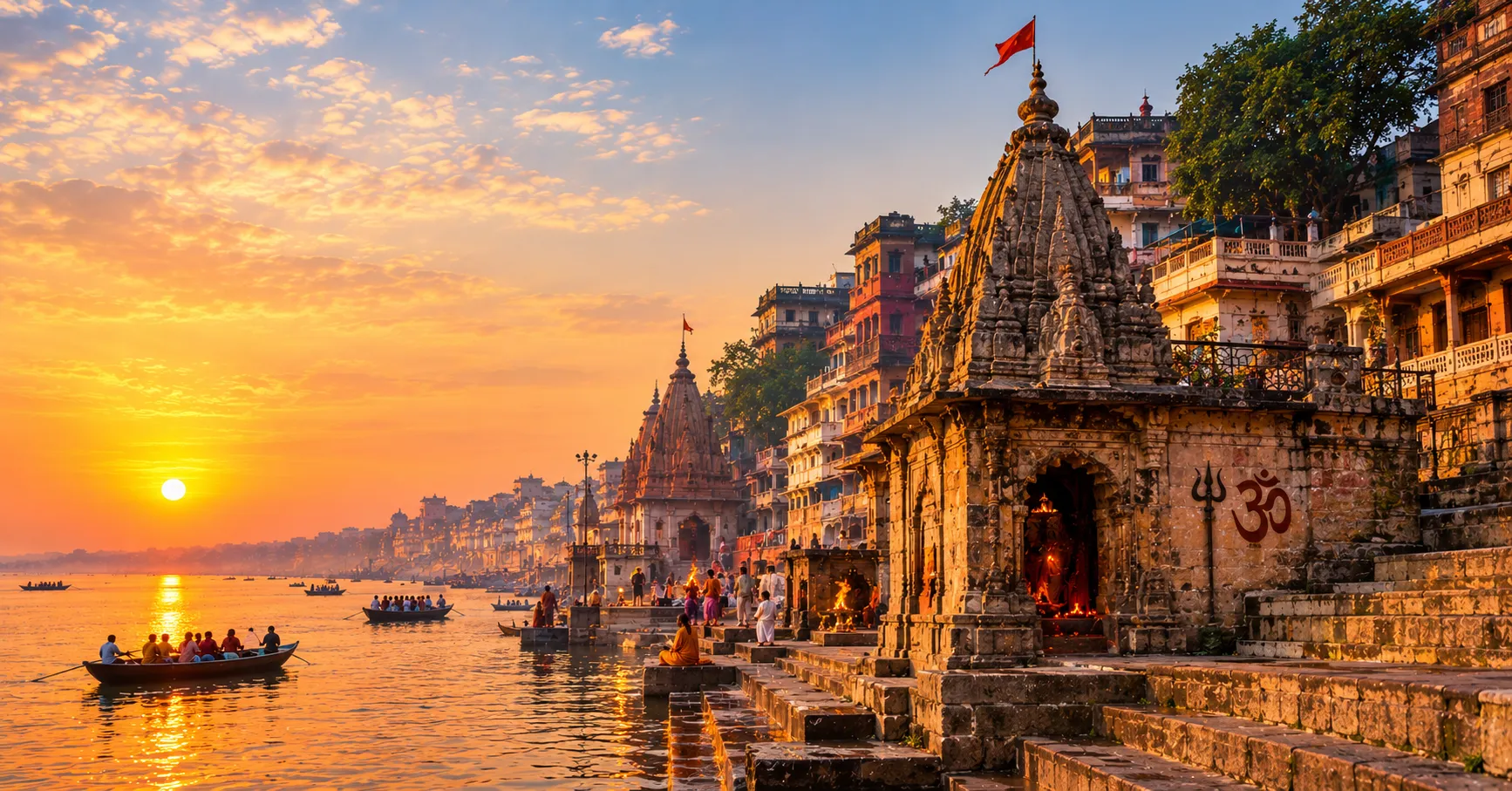
Quick answer: Kedar Ghat is a colorful, calmer ghat in Varanasi, famous for the Gauri Kedareshwar Temple, which many devotees treat as Kashi's own Kedarnath. It is open day and night, takes 1 to 2 hours to see, and is best visited at sunrise or by boat.
If Dashashwamedh Ghat is Varanasi at full volume, Kedar Ghat is the place where the river feels closer and the pace slows down. Red and white stripes run across the temple walls, South Indian pilgrims bathe on the steps, and the evening lamps are quieter than the big aarti up the river. This guide covers what Kedar Ghat is, why it matters, what to do there and how to fit it into your trip.
What Is Kedar Ghat Famous For?
Kedar Ghat is named after the Kedareshwar Temple on its steps, a Shiva shrine devoted to Gauri Kedareshwar. Most visitors remember three things.
- The temple. Pilgrims who cannot travel to Kedarnath in the Himalayas come here, because devotees consider worship at this temple a counterpart to the Himalayan shrine.
- The striped walls. The red and white bands on the ghat buildings point to its South Indian management and make it one of the easiest ghats to recognize from a boat.
- The mood. The ghat is devotional but less crowded than Dashashwamedh, so it works well for meditation, photography and a slow morning.
Why Is Kedar Ghat Linked to Kedarnath?
According to the Kashi Khand, Kashi is divided into three sacred zones: Omkar Khand, Vishweshwar Khand and Kedar Khand. Kedareshwar is the main deity of Kedar Khand, and this ghat marks that zone. The temple listing for Kedareshwar quotes the Kashi Khand as saying that worship of Kedareshwar in Kashi brings far more merit than worship at the Himalayan Kedarnath, a belief that draws many pilgrims.
In front of the temple is Gauri Kund, a small sacred pond. It is mostly dry and fills mainly in the monsoon, and devotees believe its water has healing powers. Some traditions also link the ghat with the ancient Adi Manikarnika, a point often made because Harishchandra Ghat lies nearby. You can read about the main cremation ghat in our guide to Manikarnika Ghat.
Why Do South Indian Pilgrims Come Here?
Kedar Ghat has strong ties with Tamil Nadu. The temple's rituals are run by the Kumaraswamy Mutt, a monastery from Tamil Nadu that has its seat here. Records place the monastery in the late 16th century, while the ghat's steps and the neighboring Vijayanagaram Ghat were built or renewed by the Vijayanagaram state, with works dated to the 18th and 19th centuries. The temple's look reflects this link, with Dravidian touches on the structure and chants in Tamil and Sanskrit.
That is why you will see many pilgrims from the South at dawn, bathing on the steps and then going straight to darshan.
Kedar Ghat Aarti and Temple Timings
The ghat is open 24 hours. The temple follows a daily ritual schedule, and timings can shift with the season, so use this as a guide.
| Ritual | Approximate time |
|---|---|
| Mangala aarti | Around 3:15 AM |
| Second aarti | Around 10:00 AM |
| Evening aarti | Around 5:30 PM at the temple |
| Shayan aarti | Around 10:30 PM |
| Evening fire aarti on the ghat | Often listed around 6:30 PM |
Because different sources list different evening times, arrive by 5:30 PM if you want to see both the temple aarti and the ghat ritual. Kedar Ghat aarti is smaller and calmer than the main show, so it suits people who want to watch without a crush. If you want to compare it with the bigger event, read our guide to Dashashwamedh Ghat.
What Can You Do at Kedar Ghat?
Visit the temple first. Go up the steps from the ghat to reach the Gauri Kedareshwar Temple. Keep the visit short and quiet, because it is a working temple.
Sit on the steps at sunrise. The light is soft, the air is cool and the ghat is full of bathers and chanting. Many travelers use this hour for meditation or yoga.
Take a boat along the river. A sunrise ride from Kedar Ghat past the neighboring ghats is a favorite. You can drift to Assi and return, or head toward the main ghats. Our Varanasi boat ride price and booking guide explains how to book fairly.
Walk the lanes of Bengali Tola. The ghat sits among narrow lanes with sweet shops, temples and small homes, which show everyday life in the old city.
Kedar Ghat vs Dashashwamedh vs Assi
Not sure which ghat suits you? This table helps you decide.
| Feature | Kedar Ghat | Dashashwamedh | Assi |
|---|---|---|---|
| Mood | Calm, devotional | Busy, theatrical | Youthful, relaxed |
| Best for | Temple, quiet mornings, photos | Main evening aarti | Sunrise, music, cafes |
| Crowds | Moderate | Very high | Moderate |
| Time needed | 1 to 2 hours | 2 to 3 hours | 1 to 2 hours |
Most people see all three in one trip. If you want a complete list, our guide to the ghats in Varanasi gives a route you can follow.
How to Reach Kedar Ghat
Kedar Ghat lies in the Bengali Tola area of the old city, between the Vijayanagaram and Chauki ghats. It is about 4 to 5 km from Varanasi Junction, and a ride usually takes 15 to 30 minutes depending on traffic.
- By road: Vehicles stop at the end of the lanes, and you walk the last stretch downhill to the ghat. There are many steps, so wear sturdy footwear.
- By boat: Board at any main ghat, or go from Assi to Kedar Ghat by river. This is the easiest way for older travelers, as you walk up the steps directly into the temple area.
- On foot from Kashi Vishwanath: It is a long walk through lanes, so most people take a vehicle or a boat.
Best Time to Visit
Sunrise and the hour before sunset are the best times, when the light is gentle and the ghat is full of ritual. October to March is the most comfortable season. The ghat gets especially busy during Shravan and Mahashivratri, when special rituals are held. On Dev Deepawali, the steps are lit with lamps and look spectacular from the river. Dev Deepawali is on 24 November 2026, and you can see how we plan it in our Dev Deepawali package. For a broader view of seasons, read the best time to visit Varanasi.
Common Mistakes to Avoid
- Going at noon. The steps are hot, the light is harsh and the ghat is nearly empty. Go at sunrise or late afternoon.
- Skipping the temple. Many visitors only photograph the steps. Go in for darshan, even for a few minutes.
- Wearing slippery shoes. The steps are old and can be wet, so choose a grippy sole.
- Agreeing to unclear boat prices. Fix the rate, the route and the duration before you step on board.
- Treating it as a photo stop only. People bathe and pray here, so ask before photographing individuals.
Add Kedar Ghat to Your Plan
Kedar Ghat fits well with a sunrise boat ride, followed by temple darshan and breakfast in the old city. For a plan that links the ghats, temples and the evening aarti, our temples in Varanasi guide helps you choose what else to include. If you want a driver and a guide organized together, the 2 days Varanasi tour package can include a morning at Kedar Ghat.
Conclusion
Kedar Ghat rewards people who like their sights with some room to breathe. Go at sunrise, see the Gauri Kedareshwar Temple, sit on the striped steps and finish with a boat ride. It makes a gentle contrast to the bigger evening shows in Varanasi.
If you want your boat, guide and timing arranged for you, contact our team and we will plan Kedar Ghat into your Varanasi stay.