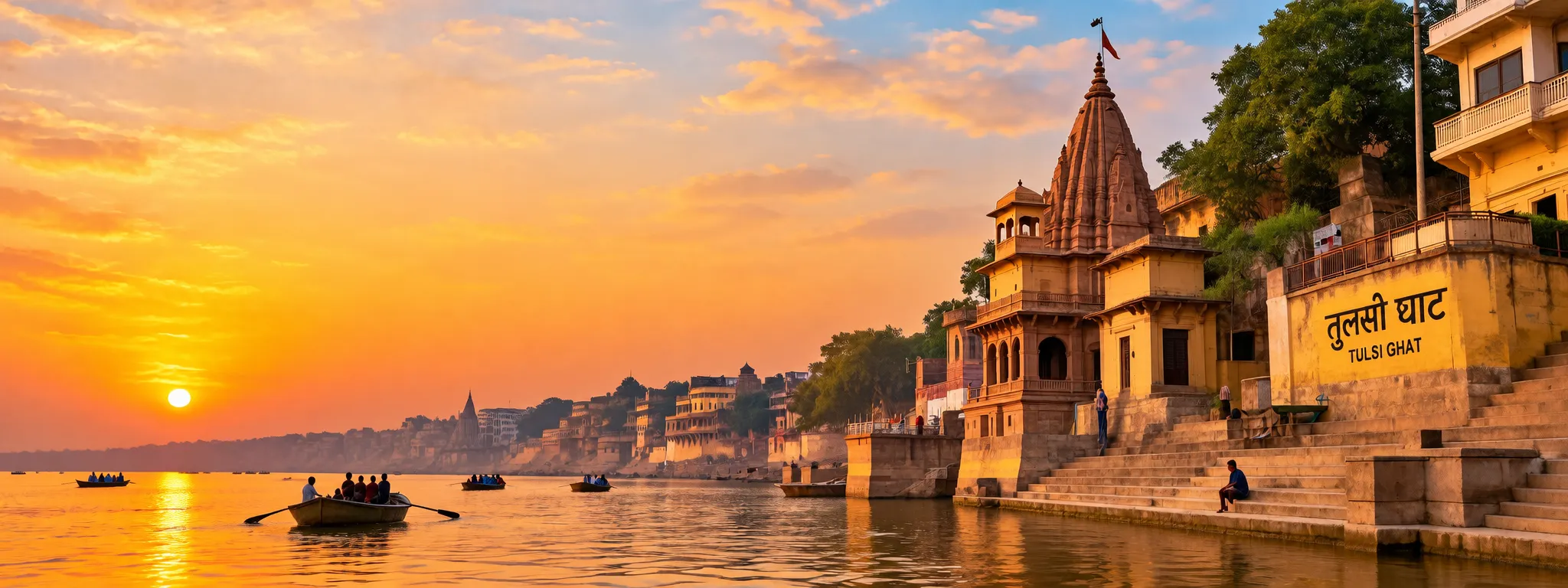
Tulsi Ghat is the quiet, literary ghat of Varanasi. Named after the poet-saint Tulsidas, who wrote the Ramcharitmanas, it sits on the southern stretch of the riverfront just beyond Assi Ghat. There are no huge crowds and no loud shows here. Instead, you find a preserved house, an ancient sun pond, an old wrestling akhada and some of the oldest live theatre traditions in India.
If you are in Varanasi this month, the timing is good. Ramlila season is on, and Nag Nathaiya and Dev Deepawali follow in November. This guide explains what Tulsi Ghat is, what to see, when the festivals fall, and how to reach it.
Who Was Tulsidas, and Why Does This Ghat Carry His Name?
Goswami Tulsidas was a 16th century poet-saint who wrote the Ramcharitmanas in Awadhi, so ordinary people could read and sing the story of Ram. His work is still recited in homes, temples and Ramlila stages across North India. Tradition says he lived at this ghat while composing the epic, and that he died nearby in 1623.
Before it carried his name, the ghat was known as Lolark Ghat, after the sacred pond close by. The renaming came from the saint's long association with the place. Records say the ghat was made pucca (paved in stone and cement) in 1941 by the industrialist Baldeo Das Birla, which is why the steps look quite clean and even compared with older ghats.
A popular story says that Tulsidas's manuscript fell into the Ganga and did not sink, which devotees see as a sign of its sanctity. If you have visited the Tulsi Manas Temple, this ghat is the older, riverside side of the same story. You can read about that temple in our guide to Tulsi Manas Mandir.
What You Can See at Tulsi Ghat
The house of Tulsidas
A simple old house near the ghat is kept as a memorial. Reports say that items linked to the saint, such as his wooden sandals and a Hanuman idol he worshipped, are preserved here. It is small and quiet, and most visitors spend 15 to 20 minutes. Dress modestly, and keep your voice low, since it is a place of worship.
Lolark Kund
Lolark Kund is an ancient stepped pond dedicated to the Sun, long considered one of Kashi's important sun sites. Devotees believe a bath here, especially on Lolark Shashthi (usually in August or September), brings blessings for children, and it has also been linked to the relief of skin ailments. Treat these as traditional beliefs rather than medical claims. The steps are steep, so go slowly.
The Hanuman temple and the akhada
Tulsidas is said to have set up a Hanuman temple and an akhada, a traditional wrestling and exercise ground, at the ghat. Early in the morning, you may still see people exercising in the old style. It gives the ghat a very different feel from the tourist stretches nearby.
The river view
The steps look across to the quiet far bank, and the light in the early morning is soft. This is one of the better ghats for photography, as long as you stay respectful of bathers and worshippers.
Festivals That Make Tulsi Ghat Special
Tulsi Ghat is at its best during a few events. The calendar below uses approximate months, so confirm dates locally.
| Event | When | What happens |
|---|---|---|
| Ramlila | Around Dussehra (Sharad Navratri period) | A long Ramlila tradition linked to Tulsidas |
| Nag Nathaiya | Kartik Shukla Chaturthi, usually in November, shortly before Dev Deepawali | Krishna's victory over the serpent Kaliya is staged on the river |
| Dev Deepawali | Kartik Purnima, 24 November 2026 | Ghats lit with lamps, a major riverside view |
| Dhrupad Mela | Usually in late winter | Classical music festival linked to the ghat |
| Lolark Shashthi | August to September | Special bathing at Lolark Kund |
Nag Nathaiya is the star. According to tradition, Tulsidas began it in the 16th century. A tall tree is set up at the river's edge, and a young boy playing Krishna jumps into the river and then rises on a model of the serpent Kaliya. The Kashi Naresh, the titular king of Varanasi, traditionally watches from a royal boat. Thousands gather on the steps and in boats, so book a place early.
Dussehra is on 20 October 2026, and Dev Deepawali is on 24 November 2026. For the festival side of your trip, see our Dev Deepawali package.
A Slow Morning Route: Assi, Tulsi and Kedar
Tulsi Ghat works well as one stop on a southern riverfront morning. Here is a simple route.
- 5:30 AM: Start at Assi Ghat for the sunrise and a cup of tea.
- 6:30 AM: Walk or ride the short distance to Tulsi Ghat, and visit the house and Lolark Kund.
- 8:00 AM: Continue by boat to Kedar Ghat to see the Gauri Kedareshwar Temple. Our guide to Kedar Ghat explains what to see there.
- 9:30 AM: Breakfast in the old city.
- Later: Go to the Sankat Mochan Temple, which is closely linked with Tulsidas. See our Sankat Mochan Hanuman Temple guide.
If you need help picking and pricing a boat, our Varanasi boat ride price and booking guide covers it.
Tulsi Ghat Timings
The ghat is open all day and night, like all ghats in Varanasi. The best times are sunrise and the hour before sunset. The house and temple areas follow normal daytime hours, so go before noon to be safe. Some sources list evening ceremonies and aarti, but they are smaller than at the main ghats, so confirm locally.
How to Reach Tulsi Ghat
Tulsi Ghat lies between Assi Ghat and the neighboring ghats on the southern side of the city. It is roughly 7 to 8 km from Varanasi Junction, and the ride takes about 25 to 40 minutes depending on traffic.
- By road: Take a car, auto or e-rickshaw to Assi, then walk along the ghats for a few minutes.
- By boat: Board at Assi or any main ghat. You can step directly onto the steps.
- On foot from Assi: Easy and pleasant in the morning.
For a bigger picture of the riverfront and a plan to link the ghats, see our guide to the ghats in Varanasi.
Best Time to Visit
October to March is the most comfortable season. Early morning is the quietest time, while Nag Nathaiya and Dev Deepawali are the busiest. If you want to see the ghat in a calm mood, avoid the festival nights. If you want the full spectacle, plan ahead and book your boat or rooftop seat. Our best time to visit Varanasi guide explains the seasons.
Tips for Visiting
- Go at sunrise for the best light and the quietest atmosphere.
- Wear modest clothes and shoes with a good grip, as steps can be wet.
- Ask before photographing people who are bathing or praying.
- Carry some small cash for offerings and chai.
- Keep valuables to a minimum during festivals, as crowds get dense.
- Combine it with Assi and Kedar Ghat to make the trip worthwhile.
Add It to Your Varanasi Plan
Most travelers fit Tulsi Ghat into a southern morning with Assi, Kedar and the temples around BHU. If you want a driver, a boat and a guide planned together, our 2 days Varanasi tour package can include this stretch.
Conclusion
Tulsi Ghat is where Varanasi's poetry, devotion and theatre come together without the crowds. Visit at sunrise, step into Tulsidas's house, see Lolark Kund and plan around Nag Nathaiya or Dev Deepawali if you can.