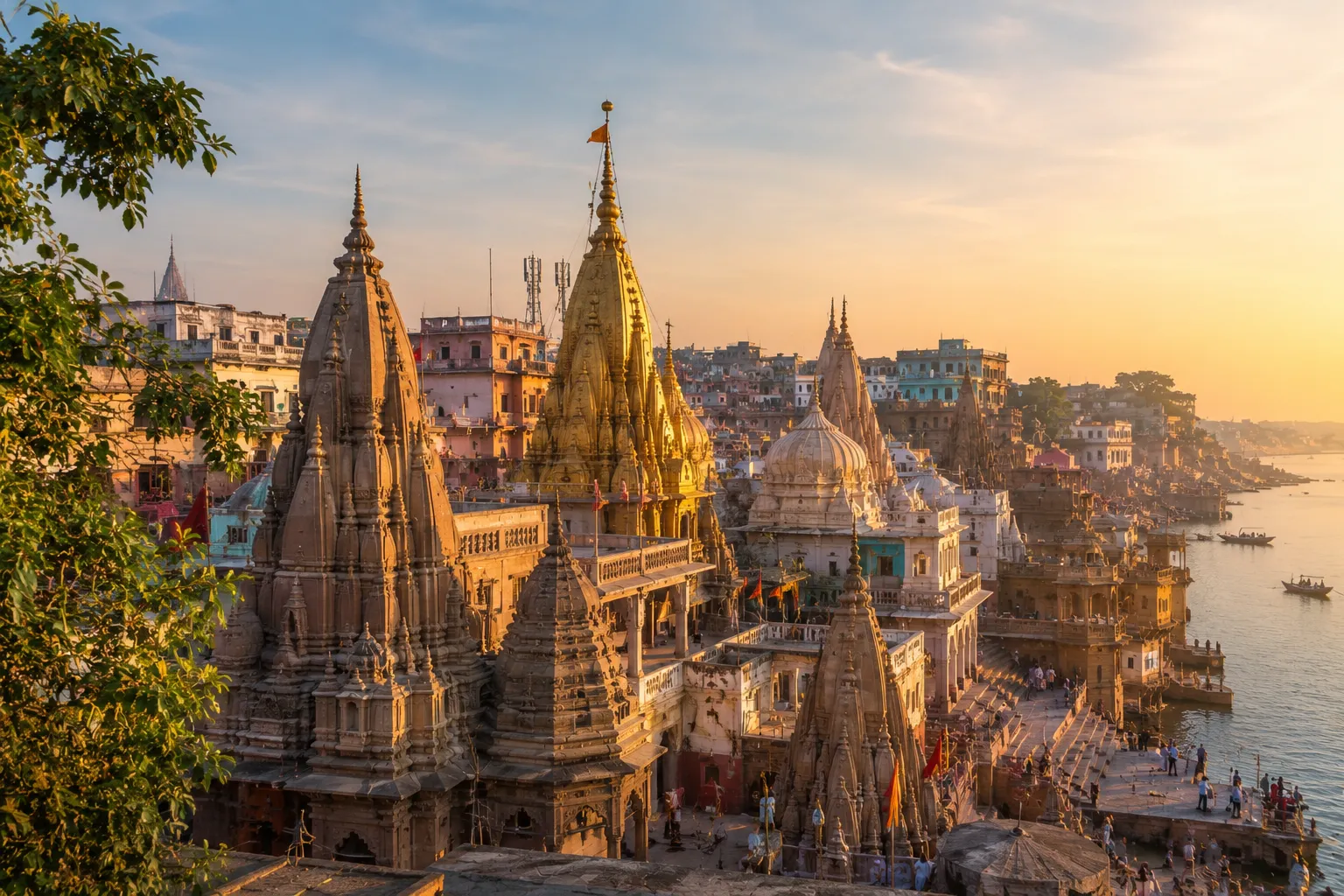
People call Varanasi the city of temples, and once you're actually walking its lanes, you get why. You'll pass three or four small shrines just getting from your hotel to breakfast. Some are grand, gold-topped, guarded by police. Others are a single stone idol under a tree with a diya burning next to it, tended by nobody in particular. Honestly, that mix is what makes this city different from anywhere else in India.
If you're trying to figure out which temples matter, which order to see them in, and what you can actually bring inside without getting turned away at security, this guide covers it properly. No fluff, no recycled "top 10" list copied from five other sites.
Want someone local to just handle the temple route, timings, and entry passes for you?
Reach out to our team and we'll take care of it.
So, How Many Temples Are There in Varanasi, Actually?
This is one of those questions where you'll get a different answer depending on who you ask, and we think it's worth being upfront about that instead of just throwing out one number and moving on.
The figure you'll see most often is around 3,000 temples. Some older sources round it down to about 2,000, and a few enthusiastic ones claim closer to 23,000 if you count every roadside shrine, household deity corner, and tiny neighborhood idol tucked into a wall. There's also a well known spiritual circuit of 108 significant temples that serious pilgrims try to cover across a multi-day Kashi Yatra, based on references in the Skanda Purana.
Here's the honest truth: nobody has done an official census of every shrine in this city, and they probably never will, because new ones get added and old ones fade out of use constantly. What matters for a visitor isn't the exact count, it's knowing which handful of temples are actually worth your limited time. That's what the rest of this guide is for.
Which Temple Should You Visit First in Varanasi?
This is a question a lot of guides skip entirely, they just hand you a list of ten temples with no order and let you figure it out. That's a mistake, because in Varanasi, the order genuinely matters, at least according to local tradition.
Locals will tell you the correct first stop isn't Kashi Vishwanath at all. It's Kaal Bhairav Temple, dedicated to the fierce guardian deity considered the kotwal, or police chief, of the entire city. Traditional belief holds that you should seek his permission before visiting any other shrine in Kashi, otherwise your pilgrimage isn't considered complete. Whether you follow this strictly or not, it's a genuinely interesting temple to start with, dark, intense, a little different from the polished corridors you'll see later. The idol is decorated with garlands and a silver crown, and devotees offer black sesame oil and urad dal as offerings here, which you won't see at most other temples in the city.
After that, most pilgrims move on to Kashi Vishwanath Temple, the central and most important shrine in the city, and then to the goddess temples like Durga Mandir and Annapurna Devi Mandir, followed by Sankat Mochan Hanuman Temple for protection from obstacles. Think of it less as a checklist and more as a small spiritual route through the city: the guardian first, the heart of the city second, the protectors after that.
If you're not religious and just want the highlights, skip the sequencing and go straight to Kashi Vishwanath, ideally early morning before the crowds build up. We've got exact opening hours and the best time slots in our Varanasi temple timings guide, worth checking before you plan your day around it.
Must Visit Temples in Varanasi
Here's the honest shortlist, the ones that are actually worth the walk or the rickshaw ride.
Kashi Vishwanath Temple
The big one. One of the twelve Jyotirlingas of Lord Shiva and easily the most important temple in the city. The current structure dates back to 1780, rebuilt by Ahilyabai Holkar, the Queen of Indore, after the original was destroyed multiple times through history. The dome and spire are plated with roughly 800 kilograms of gold, added later by Maharaja Ranjit Singh of Lahore. Since the Kashi Vishwanath Corridor opened, the walk from the ghats to the temple is far smoother than the old, cramped Vishwanath Gali route. Entry is open to all faiths, though the inner sanctum has stricter rules we'll get to below. If you time your visit right, you can pair it with the evening Ganga Aarti at the ghats nearby, both in the same evening walk.
Sankat Mochan Hanuman Temple
Built by the poet-saint Tulsidas, this one's dedicated to Lord Hanuman and is where people go when life feels genuinely difficult. There's a real energy here on Tuesdays and Saturdays when special prayers happen and the temple gets packed. Fair warning, there are a lot of monkeys around this temple, hold onto your food and glasses.
Durga Mandir
Also called the Monkey Temple for obvious reasons once you visit, this temple dedicated to Goddess Durga is one of the older and more atmospheric shrines in the city. The current temple structure dates to the 18th century, built in North Indian Nagara style with a striking red ochre color that comes from the stone itself, not paint.
Annapurna Devi Mandir
Right next to Kashi Vishwanath, dedicated to the goddess of food and nourishment. The idol holds a gold pot and ladle, and there's a genuinely nice tradition where prasad here is meant to symbolize that no one who worships the goddess ever goes hungry. Quick, quiet, worth the five extra minutes.
Kaal Bhairav Temple
Already mentioned above as the traditional first stop, but worth repeating that this one has a different, more intense atmosphere than the others. Less touristy, more local devotion, and honestly a good contrast if you're temple-hopping and everything's starting to blur together.
Tulsi Manas Temple
A more modern temple, built in 1964, marking the spot where Tulsidas is believed to have written the Ramcharitmanas. The marble carvings on the walls depict scenes and verses from the epic itself, which makes it worth a slow walk around even if you're not particularly religious.
New Vishwanath Temple
Located inside the Banaras Hindu University campus, this is a modern replica of the original Kashi Vishwanath, built with white marble and open to all, all religions and all castes, which was actually a deliberate and progressive statement when it was built. It's calmer, less crowded, and a nice break if the main temple felt overwhelming.
Can Devotees Carry a Purse Inside Kashi Vishwanath Temple?
Short answer, no, not really, and this trips up a lot of first time visitors.
Security at Kashi Vishwanath is genuinely strict, closer to airport level checks than what you'd expect at most temples. Bags, purses, mobile phones, cameras, power banks, smartwatches, and pretty much any electronic device are not allowed inside the temple complex or the inner corridor. If you show up carrying one, you'll be sent back to deposit it, and depending on how busy the queue is, that can cost you your place in line.
There are locker facilities available near the entry gates specifically for this, usually charging a small fee, somewhere around 20 to 50 rupees depending on the counter. Our honest advice, trust us on this one, just don't bring a purse or bag at all if you can help it. Leave it at your hotel, carry only what genuinely fits in a pocket, some cash, your ID if needed, and maybe a small offering. It makes the whole entry process so much faster and you won't be standing in a side queue while your group waits for you.
One more thing worth knowing, rules around what's allowed do shift a bit depending on the season and crowd levels, especially during Sawan or major festivals when security tightens further. If you're visiting during a peak period, it's worth checking current guidelines a day or two before rather than assuming last year's rules still apply.
A Few Practical Notes
Dress modestly, shoulders and knees covered, it's not strictly enforced everywhere but it's respectful and it avoids any awkward moment at the gate. Footwear comes off before you enter most temple premises, so slip-on shoes save you a lot of hassle compared to ones with laces. Early morning visits, right around 5 to 7 AM, are noticeably calmer than late morning or evening, when queues at Kashi Vishwanath especially can stretch for hours.
Photography is restricted inside most inner sanctums, and honestly, we'd say don't fight it. Some moments are better experienced than photographed anyway.
Before Visiting the Temples of Varanasi
Varanasi's temples aren't really meant to be rushed through in an afternoon, even though a lot of tour itineraries try to make you do exactly that. Give yourself time to actually sit for a few minutes at each one, watch the rituals happen, listen to the bells and the chanting rather than just snapping a photo and moving on. That's when this city starts to feel like something more than a sightseeing stop.