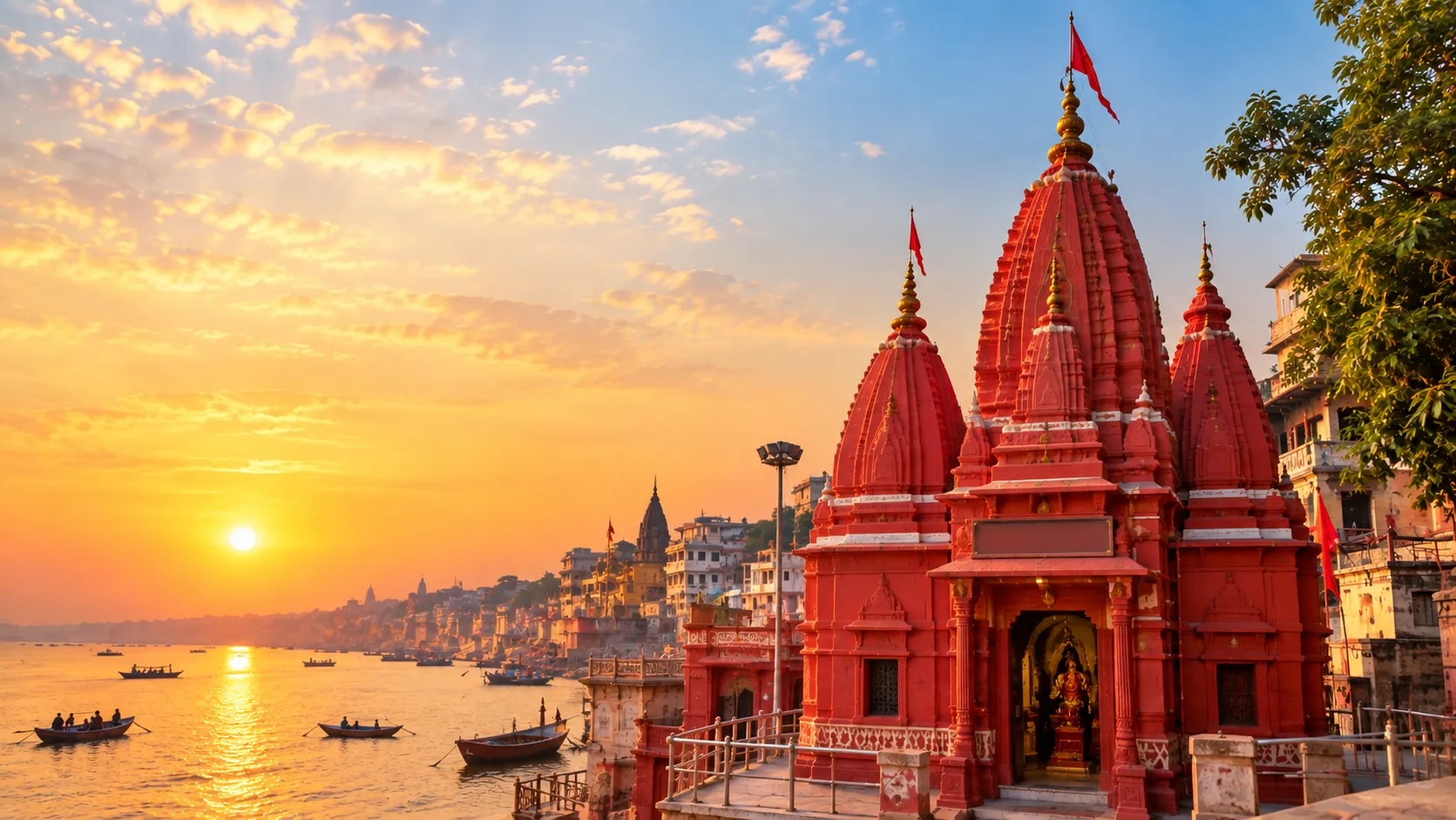
The Durga Mandir in Varanasi is one of the best known temples in the city and a must-visit for anyone who worships the Goddess. Painted in deep red and standing beside a large rectangular pond, it is also called the Durga Kund Mandir. Devotees believe the goddess protects Kashi, so the temple is especially busy on Tuesdays, Fridays and during Navratri.
Sharad Navratri runs from 11 to 19 October 2026, so if you are in Varanasi this month, this guide will help you plan your darshan. It covers the temple's history, Durga temple Varanasi timings, aarti, festivals, nearby places and how to reach Durga Kund.
Durga Mandir Varanasi at a Glance
| Detail | Information |
|---|---|
| Deity | Goddess Durga |
| Also known as | Durga Kund Mandir, Durga Temple, the "Monkey Temple" |
| Location | Durga Kund, Bhelupur area, southern Varanasi |
| Built by | Rani Bhabani of Natore, Bengal, in the 18th century (around 1760) |
| Style | Nagara style, red sandstone, painted red ochre |
| Entry fee | None reported |
| Busiest days | Tuesday, Friday and Navratri |
| Nearby | Tulsi Manas Temple, Sankat Mochan Hanuman Temple, BHU |
History of Durga Mandir and Durga Kund
The present temple was built in the 18th century by Rani Bhabani, a Bengali queen from Natore. She is remembered in Varanasi for restoring and building several shrines at a time when many old temples had fallen into disrepair. Records and travel accounts place the temple around 1760. A music pavilion (naubatkhana) was added in 1823, and some of the older structure shows the Bengali patronage that shaped many Kashi temples.
According to local tradition, the temple was raised so that the goddess would protect Varanasi. The ancient temple is said to have been damaged more than once, and the Rani's work gave the site the form it has today. The temple is built of red sandstone in the Nagara style and painted in a red shade linked with the goddess.
Beside the temple lies Durga Kund, a large rectangular pond with steps. It was once connected to the Ganga. The kund is part of the story of the place, and during Nag Panchami, a special scene of Lord Vishnu resting on the serpent is created on its waters, which draws many visitors.
Durga Temple Varanasi Timings
Timings differ a little from one source to another, and they can change on festival days. Use the table as a planning guide and confirm locally.
| Time of day | Approximate timing |
|---|---|
| Morning darshan | From around 4:00 AM to 1:00 PM |
| Afternoon break | Around 1:00 PM to 3:00 PM |
| Evening darshan | From around 3:00 PM until night, often listed up to 8:00 to 10:30 PM |
| Navratri | Extended hours and long queues |
The temple is open on all seven days. For a quieter visit, go early on a weekday morning. For the busiest, most devotional mood, go on a Tuesday or Friday evening, or during Navratri. If you are building a day around several temples, our Varanasi temple timings guide helps you avoid closed gates.
Durga Mandir Aarti Timings
Aarti is held several times a day. Reported timings are approximate, so check at the temple.
| Aarti | Approximate time |
|---|---|
| Mangala aarti | Around 4:00 AM |
| Bhog aarti | Around 12:00 noon |
| Sandhya aarti | Around 7:00 PM |
| Shayan aarti | Around 11:00 PM, subject to the temple's schedule |
The evening aarti is the most atmospheric, with bells, lamps and chants echoing around the courtyard and the pond. Arrive 20 to 30 minutes early if you want a place near the front.
Festivals at Durga Kund
Navratri and Durga Puja
This is the biggest time of the year. Devotees come from across Varanasi and nearby towns, and a fair is set up around the kund. The queue can stretch far beyond the temple gate, especially on the final days.
Nag Panchami
The kund is the center of special celebrations, including the enactment of Lord Vishnu on the serpent.
Durga Kund Sangeet Samaroh
During Shravan and Bhadrapada (around August and September), a classical music festival is held, where well-known artists perform in honor of the goddess.
Tuesdays and Fridays
These are regular days for goddess worship, so the temple gets a steady stream of visitors all year.
What to Expect Inside the Temple
You enter through a gate lined with shops selling flowers, chunris, coconuts and sweets. The main shrine sits inside a pillared hall. The queue moves slowly in the evening, but staff keep it orderly. Monkeys live around the complex, so keep food, glasses and small items safe, and avoid carrying loose things in your hand.
Photography may be restricted inside, and phones or bags may not be allowed near the sanctum. Follow the signs and carry only what you need.
What to Offer
Devotees usually offer red flowers, a red chunri, coconut, sindoor and prasad. Buy from the shops near the entrance, ask for the price first and keep small change ready. Entry is free, and there is no ticket for general darshan.
How to Reach Durga Kund from Varanasi
Durga Kund is in southern Varanasi, on the road toward Sankat Mochan and BHU. It is about 1.3 km from BHU and roughly 700 m from the Sankat Mochan Temple.
- By car or taxi: The easiest way, especially for families. Allow 30 to 45 minutes from the old city, depending on traffic.
- By auto or e-rickshaw: Easy to find, and cheap. Agree on the fare first.
- From Assi Ghat: A short ride, which pairs well with the morning aarti or a boat ride. See our guide to the ghats in Varanasi if you want to plan a riverside stop.
Places to Visit Near Durga Mandir
The south side of Varanasi is compact, so you can cover several temples in a half day.
- The Tulsi Manas Temple, only about 250 m away, with its white marble walls and verses of the Ramcharitmanas
- The Sankat Mochan Hanuman Temple, a short ride away
- The New Vishwanath Temple on the BHU campus
- Durga Ghat, close to the temple
- Lolark Kund, an ancient stepwell about a kilometer to the east
A good half-day plan is to start at the Durga Mandir early, walk to Tulsi Manas, continue to Sankat Mochan and end at Assi Ghat in the evening. For a bigger list of shrines, see our guide to the temples in Varanasi.
Best Time to Visit
Early morning and early evening are the most comfortable. October to March is pleasant, while summers are hot, so go as early as you can. If you want a calm visit, avoid Tuesday and Friday evenings and the last days of Navratri. Our best time to visit Varanasi guide explains the seasons and festival crowds month by month.
Tips for Visiting Durga Kund Temple
- Go early for shorter queues.
- Wear light, modest clothes and shoes that are easy to remove.
- Keep valuables to a minimum, and watch your belongings in the crowd.
- Carry small cash for flowers, chunri and prasad.
- Watch for monkeys, and do not tease or feed them.
- Check aarti timings before you leave.
- Keep time for the walk between the temples, as lanes get busy around festival days.
Plan Your Visit with a Tour
Most travelers pair the Durga Mandir with Tulsi Manas and Sankat Mochan in a single trip. If you want a driver and a route built around darshan timings, our 2 days Varanasi tour package can include these stops.
Conclusion
The Durga Mandir is a lively, colorful and deeply devotional place that fits easily into a southern Varanasi day. Go early, visit Tulsi Manas and Sankat Mochan nearby, and keep extra time if you come during Navratri.
If you want a smooth plan with transport and darshan timings handled, contact our team and we will fit the Durga Mandir into your Varanasi trip.