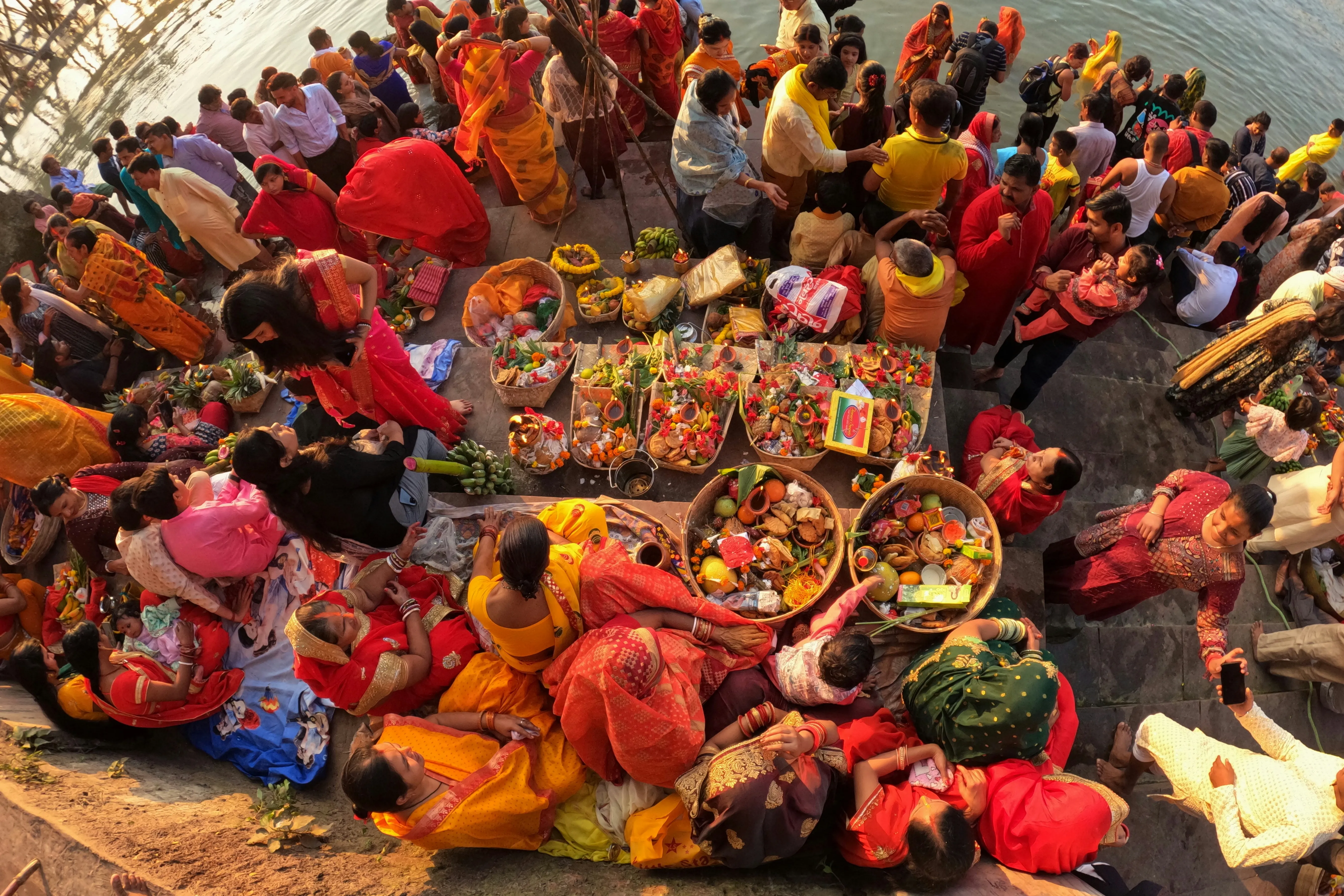
Chhath Puja in Varanasi is one of the most beautiful sights you can see on the Ganga. Thousands of families stand waist-deep in the river at sunset and sunrise, holding bamboo baskets of fruit, sugarcane and thekua towards the sun. The ghats glow with diyas, the air smells of ghee and incense, and the whole riverfront sings together.
In 2026 the festival runs from 13 to 16 November, and it falls just before Dev Deepawali on 24 November. If you want to watch it, a little planning goes a long way. This guide covers the exact dates, Arghya timings, the best ghats, crowd and boat rules, and how to fit both festivals into one trip.
Chhath Puja 2026 Dates at a Glance
Chhath is a four-day festival. The main ritual days are the third and fourth days, when devotees offer Arghya (water and prasad) to the setting and rising sun.
| Day | Date | Ritual | What happens |
|---|---|---|---|
| Day 1 | Friday, 13 November 2026 | Nahay Khay | Holy bath in the Ganga and one simple, pure meal |
| Day 2 | Saturday, 14 November 2026 | Kharna | Fast all day, then kheer and roti prasad after sunset |
| Day 3 | Sunday, 15 November 2026 | Sandhya Arghya | Evening offering to the setting sun at the ghat |
| Day 4 | Monday, 16 November 2026 | Usha Arghya and Parana | Morning offering to the rising sun, then the fast is broken |
After the Kharna prasad, devotees (called vratis) keep a strict fast of about 36 hours without even water. That is why the ghats feel so calm and focused on days three and four.
If you are a visitor and not a vrati, 15 November evening and 16 November morning are the two moments you should plan around.
Why Chhath Puja in Varanasi Feels Different
Chhath is mainly a Bihar and eastern Uttar Pradesh festival, and Varanasi sits right in the middle of that belt. Lakhs of families from Varanasi, Purvanchal and nearby districts gather on the Ganga ghats and at ponds and kunds across the city.
What makes it special here is the backdrop. You are not watching Chhath at a small pond. You are watching it on the same steps where the Ganga Aarti happens, with old palaces and temples rising behind the crowd.
You will see women in bright sarees and men carrying heavy bamboo trays on their heads. Families sing traditional Chhath songs together. Sugarcane stalks are tied into small canopies at the water's edge, and rows of diyas float and flicker on the river. There are no big stages and no performers. It is a family festival, and visitors are welcome to watch it quietly and respectfully.
Sandhya Arghya and Usha Arghya Timings in Varanasi
Arghya is always offered at the exact moment of sunset and sunrise, so the timings depend on your city. For Varanasi in mid-November, the approximate times are:
- Sandhya Arghya (Sunday, 15 November): Sunset at around 5:10 PM
- Usha Arghya (Monday, 16 November): Sunrise at around 6:15 AM
These can shift by a minute or two depending on the source, so check a local panchang a few days before you travel.
Families do not arrive at the last minute. Most vratis reach the ghat 2 to 3 hours before sunset to set up their spot, and well before dawn on the final morning. As a visitor, plan to be at the ghat by 3:30 PM on 15 November and by 4:45 AM on 16 November. That gives you time to walk in, find a safe spot on the steps and see the whole build-up.
Best Ghats for Chhath Puja in Varanasi
Varanasi has 84 ghats, and Chhath happens at many of them. Our full guide to the ghats in Varanasi explains the whole riverfront. For Chhath, these are the ghats that matter most.
Assi Ghat
Assi is the favourite for people who want a calmer, more traditional feel. The ghat is wide, the steps are easy to sit on, and the city usually decorates it with lights and flowers during the festival. Government teams and rescue crews are normally deployed here in large numbers because the crowd is so big. Read more about it in our Assi Ghat guide.
Dashashwamedh Ghat and the nearby ghats
This is the most famous ghat in Varanasi, and it is the busiest. Rajendra Prasad Ghat and Sheetla Ghat nearby also fill up with families. The atmosphere is intense and photogenic, but it is crowded and the lanes around it are tight. See our Dashashwamedh Ghat guide for the layout and walking routes.
Rajghat and Namo Ghat side
The northern stretch of the riverfront has more open space, which helps with the sheer size of the crowd. If you like to see Chhath at a bigger scale and with a little more room to move, this side is worth a look. Vehicle entry toward Rajghat bridge and Namo Ghat has been closed during Chhath in recent years, so expect to walk the last stretch.
Shastri Ghat and the Varuna riverside
Not all of Chhath happens on the Ganga. The Varuna riverside, including Shastri Ghat near the Varuna bridge, also sees huge gatherings every year. It is a good option for a local, neighbourhood feel away from the main tourist stretch.
Which one should you pick? If it is your first time, choose Assi for a relaxed view or Dashashwamedh for the grand scene. If you have two evenings free, try both.
What to Expect on the Ghats
On the evening of Sandhya Arghya, the ghats fill slowly from the afternoon. Families lay out their baskets, light diyas and wait. As the sun drops, the vratis walk into the water, fold their hands and raise the offerings. The moment is quiet and emotional, even with thousands of people around you.
Usha Arghya feels different. It starts in the dark with lamps and singing, and slowly the sky turns orange over the far bank. When the sun appears, the offering is made, and many families celebrate with hugs, prasad and shared sweets.
A few things you will notice:
- The ghats are lit up, so evening photography works well without a flash.
- Prasad is often shared with onlookers. Accept it with your right hand and a small thank you.
- The riverfront is very busy, so keep your group close and agree on a meeting point.
Crowds, Traffic and Boat Rules to Know Before You Go
This is the part most visitors miss, so read it carefully.
Traffic. In recent years the Varanasi traffic police have stopped vehicles from going toward the Ganga ghats during the two main Chhath days. The Godowlia to Maidagin road became a no-vehicle zone, and entry toward the Rajghat bridge and Namo Ghat was closed. Chhath-related parking was arranged away from the ghats. Similar arrangements are likely again in 2026, so plan to walk the last 1 to 2 km. Wear comfortable shoes and carry only what you need. Check the latest police diversion notice a day or two before you travel.
Boats. Boats near the busy Chhath ghats are usually kept clear around Arghya time so the water stays safe for vratis. Do not count on a boat ride at 5 PM on 15 November or at sunrise on 16 November. Boat rules have also been stricter since February 2026, when the police set fixed boat routes and made life jackets compulsory for all passengers. Plan your boat ride for another time of day, such as late morning or after the evening rush. Our guide to Varanasi boat ride prices and booking shows what to expect and how to book.
Crowds. Expect lakhs of people across the city. The ghats are safe and well-managed, with rescue teams, divers and CCTV in place, but they are full. Do not take small children into the thickest part of the crowd, and keep valuables in a front bag.
Ganga Aarti. The evening Aarti routine can run differently on festival days. Check Ganga Aarti timings in Varanasi and confirm locally before you plan your evening around it.
Etiquette for Visitors Watching Chhath
Chhath is a deeply personal religious observance. Visitors are welcome, but a few simple habits make a big difference.
- Do not step into a family's marked space or touch their baskets.
- Ask before taking close-up photos of women in the water. Wide shots of the ghat are fine.
- Keep your voice low and your phone on silent.
- Dress modestly with covered shoulders and knees.
- Do not offer money or food to vratis who are fasting.
- Carry your own trash out with you. The ghats are cleaned heavily before and after, but every bit helps.
How to Plan Your Chhath Trip in Varanasi
Most visitors do well with 2 nights and 3 days. Here is a simple plan.
Saturday, 14 November: arrive and settle in. Check in, rest, and walk through the old city lanes in the evening. Visit Kashi Vishwanath Temple early if you want shorter queues.
Sunday, 15 November: Sandhya Arghya.
- Morning: sunrise at Assi Ghat, then a slow breakfast of kachori and jalebi.
- Afternoon: rest at your hotel and leave by 3 PM.
- Evening: be at your chosen ghat by 3:30 PM to watch Sandhya Arghya at about 5:10 PM.
Monday, 16 November: Usha Arghya.
- Leave your hotel by 4:15 AM and walk to the ghat.
- Watch the offering at about 6:15 AM.
- Late morning: take a boat ride once the waterfront opens up again, then visit Sarnath in the afternoon.
For weather, mid-November is pleasant. Days are warm at around 28 to 30°C and nights drop to around 13 to 14°C, so carry a light jacket for the early morning. Our Varanasi weather in November guide has the full details and a packing list.
Stay close to the ghats. Hotels near Assi, Lanka and Godowlia are the most useful because you can walk when roads are closed. Book early, since rooms near the ghats fill up fast around festival dates.
Chhath Puja and Dev Deepawali in One Trip
Chhath ends on 16 November, and Dev Deepawali falls on 24 November 2026, which is Kartik Purnima. That leaves an eight-day gap, so you have two good options.
Option 1: Stay in the region. Use the days in between for a wider pilgrimage circuit. A common route is Varanasi to Prayagraj, then Ayodhya, then back to Varanasi in time for Dev Deepawali. It lets you see three major cities and still return to the ghats for one of the most spectacular nights of the year.
Option 2: Go home and come back. If your schedule is tight, attend Chhath on 15 and 16 November, return home, and come back around 23 November for Dev Deepawali.
Whichever way you go, Dev Deepawali is a very different experience from Chhath. Instead of quiet prayer, you see more than a million lamps lit across the ghats and a grand evening Aarti. Our Dev Deepawali package covers stays, boat rides and ghat access for the night, and it can be combined with the Chhath dates.
Practical Tips Before You Book
- Book early. Hotels, drivers and guides sell out in the days around 15 and 16 November.
- Carry cash. Small shops and vendors near the ghats may not take cards.
- Wear shoes you can walk in. Roads near the ghats are closed to vehicles, so you will walk more than usual.
- Charge your phone and carry a power bank. You will use maps and your camera a lot.
- Keep your plan flexible. Traffic notices and ghat rules can change at short notice, so confirm the latest arrangements with your hotel or driver on arrival.
- Take a local guide. A good guide knows which ghat is calm that year and which lanes stay open.
Conclusion
Chhath Puja in Varanasi is not a show. It is a living, faithful festival where the river, the sun and thousands of families come together twice a day for two days. If you plan around the key moments, which are sunset on 15 November and sunrise on 16 November, choose your ghat early and expect to walk, you will see something you will remember for years.
And if you have a few extra days, add Dev Deepawali on 24 November to turn one trip into two of Kashi's biggest festivals. If you would like help with stays near the ghats, a local guide, transport and a combined Chhath and Dev Deepawali itinerary, contact the Varanasi Package team and we will plan it around your dates.