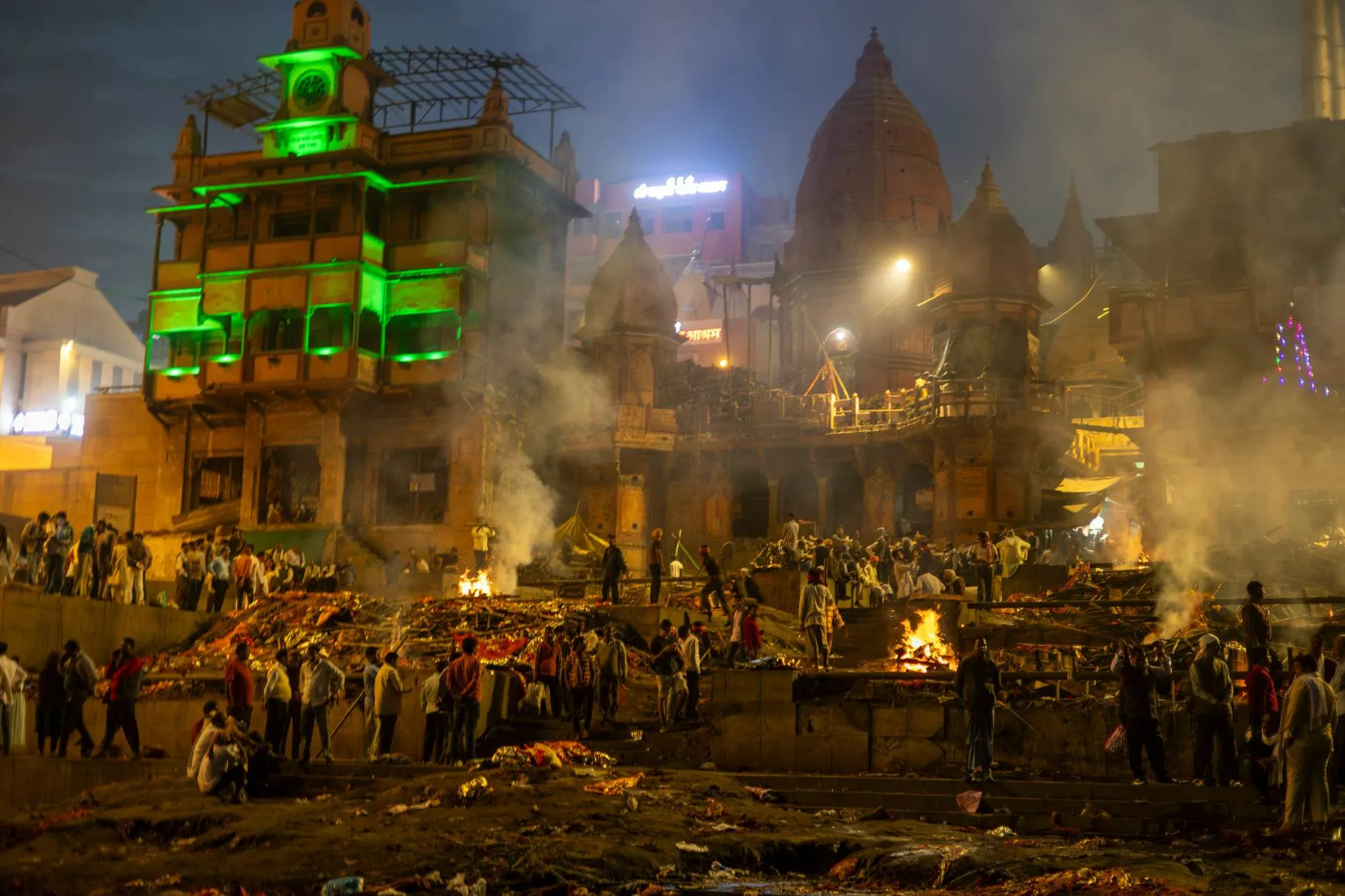
After the evening aarti ends and the crowds thin out, the ghats of Varanasi turn quiet and dark. The only steady light comes from the pyres at Manikarnika, and that is when the haunted places in Varanasi start to feel believable. Locals and online storytellers keep naming the same spots: a ghost on a bridge, a cursed temple and an abandoned mansion.
This guide covers the places most often called haunted, the story behind each, a reality check, and how to see them at night without risking your safety. If you want a guide and driver for the evening, our Varanasi trip packages can help you plan it. Treat every story as local legend, not proven fact.
Quick Look: Varanasi’s Haunted Places at Night
| Place | The story people tell | Night advice |
|---|---|---|
| Manikarnika Ghat | Spirits gather near the pyres | Watch from a boat |
| Chet Singh Fort | A raja’s ghost guards it | View from the river |
| Malviya (Rajghat) Bridge | A vengeful woman’s spirit | Never walk across |
| Ratneshwar Temple, Scindia Ghat | A cursed, leaning temple | Boat view at dusk |
| Shanivariya Kothi | Whispers in a ruined mansion | Outside view only |
| Bhooteshwar Temple | Spirits visit after dark | Daytime visit |
| BHU Post-Mortem House | Screams from an old morgue | Campus restricted |
| Assi Ghat | Restless souls after midnight | Dawn is better |
Why Varanasi Has So Many Ghost Stories
Varanasi is one of the few cities where death is part of daily life. Devotees believe that dying in Kashi frees the soul from rebirth, so families bring their dead here from across India. The pyres at Manikarnika are known to burn day and night.
When a city lives this close to death, stories of spirits grow naturally. Most locals treat them with calm respect, not fear.
The Most Haunted Places in Varanasi
Manikarnika Ghat
Storytellers say faces float on the river after dark and cries rise near the flames. The glow of the pyres through the night makes the claim easy to believe.
The reality is a sacred cremation ground, and many Hindus consider it the most auspicious place for last rites. Photography is strongly discouraged. Our Manikarnika Ghat guide explains how to watch respectfully from a distance.
Chet Singh Fort and Ghat
Online lists say the ghost of Raja Chet Singh guards his fort at night. History says otherwise. In August 1781, Warren Hastings placed the raja under house arrest, his people attacked the guards, and he escaped. He died in Gwalior in 1810, so he was not killed at the fort.
The red sandstone fort looks best from a boat at dusk.
Malviya (Rajghat) Bridge
Locals tell of a woman who fell into the river and now slaps or pushes people crossing at night. Some drivers say they avoid the bridge after dark. We found no dependable record of the incident.
The bridge carries both trains and road traffic, so do not walk on it at night. View it from the river.
Ratneshwar Mahadev Temple at Scindia Ghat
This temple leans about nine degrees and sits partly underwater in the monsoon. One legend says a man built it to repay his mother’s debt, and she cursed it for his pride. Another says Queen Ahilya Bai cursed it after a servant named it after herself.
No documents confirm who built it, so the curse stays a legend. The best view is from a boat at dusk.
Shanivariya Kothi
Online lists describe a crumbling mansion near the ghats, once owned by a wealthy merchant who met a tragic end. Visitors claim they hear whispers and see shadows in the halls at night.
We found no record of the owner or a verified address. Treat it as private property and do not enter.
Bhooteshwar Nath Temple
The name means Lord of Spirits, a title of Shiva, and that alone fuels the haunted reputation. Locals say spirits visit the temple after dark.
It is an active place of worship. Visit in daylight, dress modestly and be respectful.
BHU Post-Mortem House and old hospital buildings
Students tell of screams from an old morgue, objects moving, and a ghostly nurse in an old hospital ward. We found no confirmed records for any of it.
BHU is a working campus, and hospital buildings are not public sites. Do not enter without permission.
Assi Ghat
After midnight Assi’s wide steps are empty, and tales say spirits of those who died young linger there. By day it is the most relaxed ghat in the city, with morning music and chai stalls.
For atmosphere without the fear, go at dawn. Our Assi Ghat guide covers timings.
Other late-night names
Narayan Garden and the Kabir Chaura lanes also appear in online lists. Narayan Garden has no clear address, and Kabir Chaura is a busy neighbourhood linked to the saint Kabir. Both stay unverified.
Kaal Bhairav and the Protective Side of Kashi
Not every spirit story is frightening. Kaal Bhairav is the Kotwal, or guardian, of Kashi, and devotees visit him for protection from fear and harm. Check queue rules in our Kaal Bhairav Mandir timings guide.
Is It Safe to Visit Haunted Places in Varanasi at Night?
The ghats are safe in the evening if you use common sense. The real risks are dark steps, narrow lanes and unsafe boats, not spirits.
- Stay in a group and keep your phone charged.
- Avoid empty lanes late at night.
- Never enter abandoned or locked buildings.
- Do not photograph cremations or grieving families.
- Wear shoes with grip, as ghat steps are slippery.
- Use registered boats and wear a life jacket.
For fares and safe booking, see our Varanasi boat ride price guide.
One Evening Plan for the Haunted Ghats
- Reach Assi or Dashashwamedh before sunset and watch the Ganga Aarti.
- Take an evening boat past Chet Singh Fort, Scindia Ghat and Manikarnika. Keep your distance.
- Eat dinner in the old city.
- Be back at your hotel by 10 PM.
Cool, foggy evenings from November to February give the strongest mood. If you prefer a guide and driver for the evening, message us on WhatsApp and ask whether an evening plan can be added.
Conclusion
The haunted places in Varanasi say more about the city’s closeness to death and faith than about ghosts. See the ghats from a boat, learn the real history and treat every place with respect.