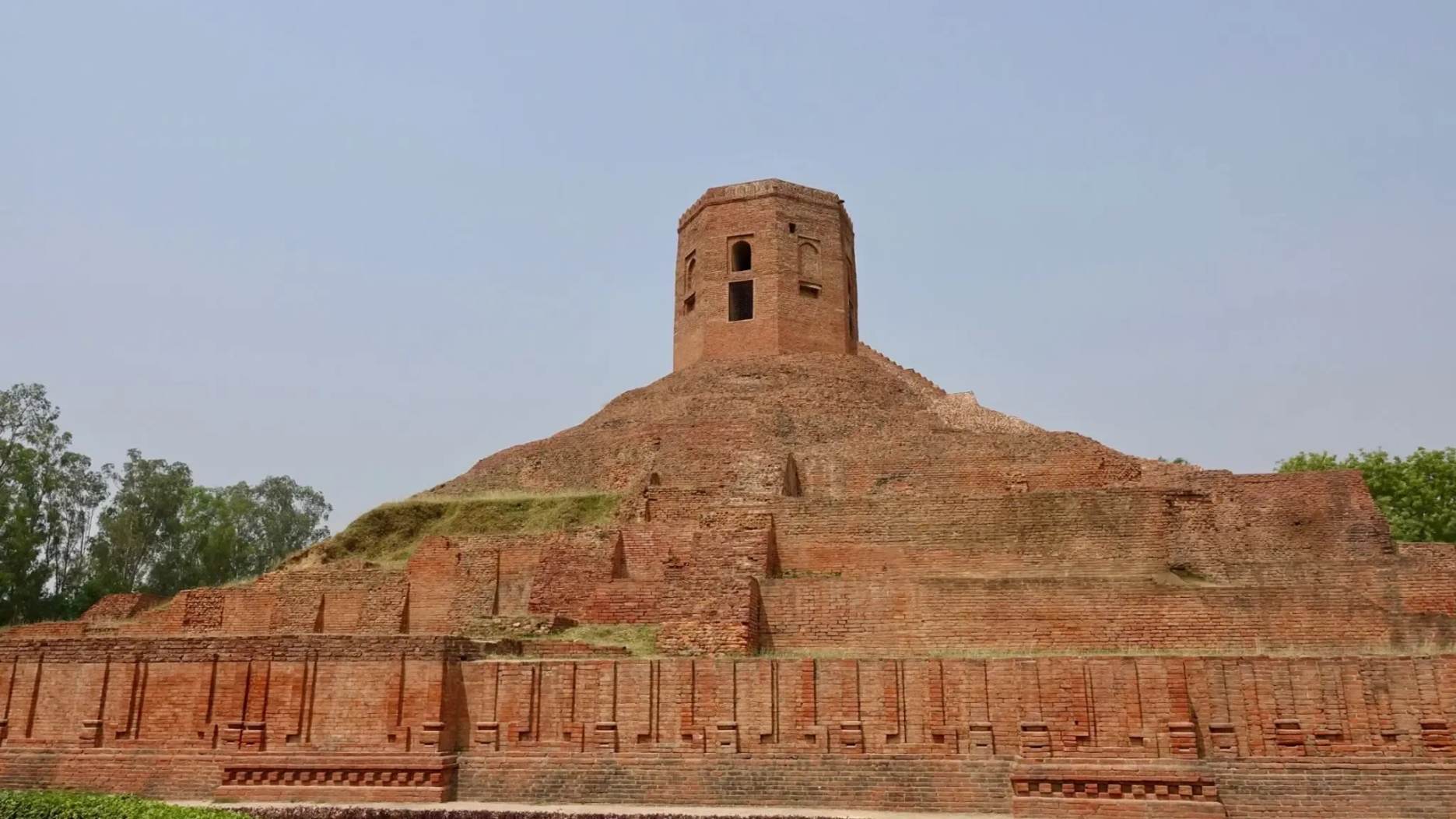
Chaukhandi Stupa is the first monument you meet when you enter Sarnath, and in July 2026 it became part of a UNESCO World Heritage property. It is a tall brick mound topped by an octagonal Mughal tower, and it marks the place where, according to tradition, the Buddha met his first five disciples. Many visitors rush past it on the way to the Dhamek Stupa, which is a mistake.
This guide covers the real history of Chaukhandi Stupa, its timings, the entry ticket facts that other pages get wrong, how to reach it from Varanasi and how to fit it into a Sarnath day. If you are planning a wider Kashi trip, our Varanasi holiday packages can include Sarnath with a driver and guide.
Chaukhandi Stupa at a Glance
| Detail | What to know |
|---|---|
| Location | Sarnath, northeast of Varanasi, on the road into the main site |
| Distance from Varanasi | About 10 km, roughly 25 to 45 minutes by road |
| Managed by | Archaeological Survey of India (ASI) |
| Timings | Daily, sunrise to sunset; most listings show 6 AM to 5 PM |
| Entry | Ticketed through a QR code; recent visitors report ₹20 for Indians |
| Time needed | 30 to 45 minutes, up to an hour with photos |
| Built | Earthen stupa around the 3rd century BCE, brick terraces by about the 6th century CE |
| Tower added | 1588, for Emperor Humayun’s visit in 1532 |
| Status | Protected monument since 2019, UNESCO World Heritage component since 25 July 2026 |
What Is Chaukhandi Stupa?
Chaukhandi Stupa is a memorial mound rather than a burial site. It rises as a lofty earthen core covered with brickwork, stands on a terraced rectangular base and is capped by an octagonal tower. The name Chaukhandi is commonly explained by its four-armed ground plan.
Its importance comes from what it commemorates. Buddhist tradition says the Buddha, after his enlightenment at Bodh Gaya, walked to Sarnath and met the five ascetics who had once left him. This is where they are believed to have reunited, shortly before the first sermon at the Deer Park.
Chaukhandi Stupa History
The Buddha and the five ascetics
The five companions, led by Kaundinya, saw the Buddha approaching and at first planned to ignore him. They changed their minds when they saw his calm. He then taught them at the Deer Park nearby, and the Buddhist community began there.
Ashoka’s pillar, the Dhamek Stupa and the monastery ruins all sit within walking distance. Chaukhandi marks the earlier moment of the meeting.
From earthen mound to brick terraces
Many guides say the stupa dates to the Gupta period, between the 4th and 6th centuries CE. The nomination text submitted to UNESCO traces it further back. It says the monument was probably first built as an earthen stupa in the 3rd century BCE. A three-level brick structure followed around the 6th century CE.
Some sources link the site to a stupa recorded by the Chinese pilgrim Xuanzang in the 7th century.
The Mughal octagonal tower
The most unusual feature is the tower on top. In 1588, Govardhan, the son of Raja Todar Mal, added the octagonal structure. It commemorates Emperor Humayun’s visit to the site in 1532.
A stone tablet in Arabic is reported above the north doorway. The tower is Islamic in style, so you are looking at Buddhist and Mughal history on one monument.
Excavation and rediscovery
Sarnath fell into ruin over the centuries, and bricks from the site were carried off for building. Archaeologists began exploring it in the 1800s, and Alexander Cunningham explored the mound in the 1830s. Later excavation at Sarnath, including work by Daya Ram Sahni, uncovered much of the wider site.
Protected status and UNESCO listing
The Archaeological Survey of India declared Chaukhandi Stupa a monument of national importance in June 2019. On 25 July 2026, UNESCO inscribed the “Ancient Buddhist Site of Sarnath” as India’s 45th World Heritage Site. The property has two components: Chaukhandi Stupa, and the Archaeological Remains of Sarnath, which include the Dhamek Stupa, Dharmarajika Stupa, Mulagandhakuti Vihara and the Ashokan pillar site.
This is the biggest change for visitors, and most older guides do not mention it.
What You Will See at Chaukhandi Stupa
The monument sits in a quiet, landscaped garden managed by ASI. As you walk around it, look for these features:
- The terraced brick base, which shows the original square plan.
- The octagonal tower, which looks very different from the Buddhist structure below it.
- Red brick and stone work, with the plan visible from several sides.
- A Buddha image in the Dharmachakra mudra, reported inside the site.
- The surrounding lawns, which make it one of the calmest spots in Sarnath.
There is no interior to enter. The experience is a slow walk around the mound and a few minutes of sitting on the grass.
Chaukhandi Stupa Timings
The stupa is open every day. Most listings give 6 AM to 5 PM, a few give 6 PM, and some give 6:30 AM. These small differences are common at ASI sites and can change with the season.
Plan to arrive by 4:30 PM at the latest so you are not caught by the last entry. Early morning is the quietest time, and late afternoon gives the best light on the brickwork.
Chaukhandi Stupa Entry Fee and Ticket
This is where online information disagrees. Some pages say entry is free, others say ₹5, ₹20 or ₹30 for Indians, and foreign visitor prices range from ₹100 to ₹500. Older pages are often out of date.
Here is what we can say with confidence:
- The monument is ticketed. It appears in the ASI’s digital ticketing listings.
- Entry is usually paid by scanning a QR code displayed at the gate.
- Recent visitors report ₹20 for Indian adults.
- Foreign nationals pay a higher rate, and children are often free.
- Fees can be revised after the UNESCO listing, so check the board at the gate.
The QR system can be slow when the network is weak. Load your payment app before you arrive and keep a little cash for small purchases.
How to Reach Chaukhandi Stupa from Varanasi
| Option | Time | Notes |
|---|---|---|
| Taxi or cab | 25 to 45 minutes | Easiest for families; agree on the waiting time |
| Auto-rickshaw | 30 to 50 minutes | Cheaper; agree on the fare before you start |
| Train to Sarnath station | Short ride | The stupa is about 2 km from the station |
| City bus | 45 to 60 minutes | Cheapest, but slower and crowded |
The stupa is the first monument on the road into Sarnath. The Dhamek Stupa is about 1 km further, so it is easy to walk between them or ask your driver to wait.
Best Time to Visit Chaukhandi Stupa
October to March is the best period, with cool weather for walking. Summer afternoons are very hot, so go early in the morning or near closing. Monsoon days can be wet but the garden is lush.
For photographs, the late afternoon sun lights the red brick well. Some visitors also enjoy sunset views from the adjacent garden next door, though check that its entry rules suit you.
Is Chaukhandi Stupa Worth Visiting?
Yes, if you care about history or want a quieter break from the Dhamek crowds. It takes under an hour and the ticket is small. It is also now part of the World Heritage listing, so you can say you have seen one of its two formal components.
It is less rewarding if you only want big sights. There are no interior rooms, and the structure is best appreciated with a little background, which is why a guide helps.
A Simple Sarnath Plan with Chaukhandi
A complete Sarnath visit takes about three to four hours. Here is a sequence that works:
- Start at Chaukhandi Stupa in the morning, while it is quiet.
- Walk or drive to the Archaeological Museum, which is closed on Fridays.
- Visit the Dhamek Stupa and the ruins of the Deer Park.
- See Mulagandhakuti Vihara and one of the Buddhist temples nearby.
- Return to Varanasi for the evening Ganga Aarti.
For opening hours of the wider site, see our Sarnath temple timings guide. For the main monument, read our Dhamek Stupa guide. Sarnath also fits into a longer trip, such as our 3 days Varanasi tour package.
Tips for Visiting Chaukhandi Stupa
- Dress modestly and wear comfortable shoes, since you will walk on grass and stone.
- Carry water, a hat and sunscreen in summer.
- Keep your voice low, as the site is a Buddhist pilgrimage place.
- Do not climb on the structure or touch the brickwork.
- Hire a licensed guide if you want the full story, and agree on the price first.
- Check the ticket board for the current rate before you pay.
Nearby Places in Sarnath
- Dhamek Stupa and the Deer Park ruins
- Sarnath Archaeological Museum, with the Lion Capital of Ashoka
- Mulagandhakuti Vihara
- The Ashoka Pillar site
- Thai, Tibetan and other international Buddhist temples
Conclusion
Chaukhandi Stupa is a short stop with a long story, from the Buddha’s meeting with his first disciples to a Mughal tower and a new UNESCO listing. Visit early, pay the ticket by QR and give it half an hour before moving on to the Dhamek Stupa.
If you want a driver, a guide and tickets sorted for Sarnath, message us on WhatsApp or call +91 9506555541.