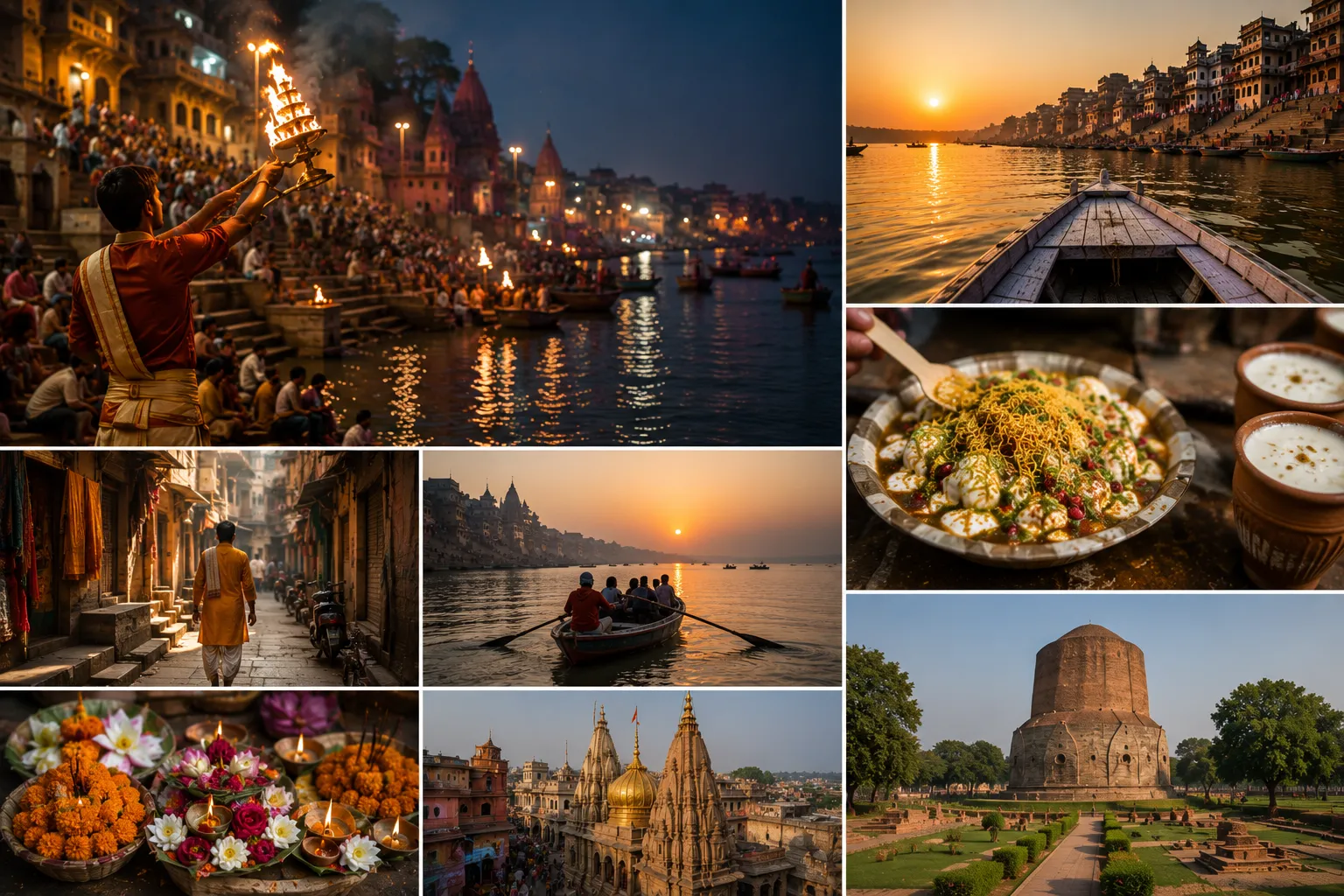
There is a moment that happens to almost every traveller who arrives in Varanasi. You step out of your hotel, walk toward the river, and the noise of the city suddenly gives way to the sound of temple bells, boat oars, and chanting priests. The air smells of incense and marigold. Somewhere a conch shell blows. And for a second, you forget which century you are standing in.
Varanasi is not just a destination. It is the oldest living city on earth, a place where faith, death, art, and daily life sit side by side on the same stone steps. As a local tour operator who has walked these ghats since childhood and guided thousands of travellers through them, we have put together this list of the best things to do in Varanasi from real experience, not just a checklist copied from somewhere else. Below you will find the most famous things in Varanasi along with practical, detailed pointers on how, when, and where to experience each one. Whether you have one day or five, here are the things to do in Varanasi that are genuinely worth your time. If you would rather have all of this arranged for you, our Varanasi travel packages cover every experience listed below.
1. Witness the Ganga Aarti at Dashashwamedh Ghat
No first visit to Varanasi is complete without the evening Ganga Aarti. It is the single most photographed and most talked about experience in the city, and it earns every bit of that reputation.
What happens during the ceremony
- A group of young priests perform a synchronised fire ritual on a raised platform facing the river, using multi tiered brass lamps, conch shells, and incense.
- The ceremony begins around 6:45 to 7:00 PM and runs for about 45 minutes, with timings shifting slightly by season.
- Devotees, tourists, and locals gather on the ghat steps and on boats floating just offshore.
How to make the most of it
- Arrive at least 40 minutes early to claim a good seat on the steps, or better yet, book a boat and watch it from the water, which is the most memorable angle by far.
- Carry a shawl in winter months, evenings by the river get cold quickly.
- Keep your phone secure. The crowd is thick and moves quickly once the aarti ends.
2. Take a Sunrise Boat Ride on the Ganges
If the evening belongs to the Aarti, the morning belongs to the boat ride, and locals will tell you this is the one experience you should never skip.
Why sunrise is the best time
- The light at dawn turns the ghats gold and pink, and the water is calm before the day's crowds arrive.
- You will see the city waking up: priests performing morning rituals, people bathing, laundry being washed, and pilgrims offering prayers to the rising sun.
- Birds, mainly seagulls in winter, often follow the boats, making it a favourite spot for photography.
Practical pointers
- Book your boat the evening before through a trusted local operator so you are not overcharged at the ghat in the morning.
- A ride from Assi Ghat to Manikarnika Ghat and back covers the most scenic and spiritually significant stretch of the river.
- Carry a light jacket, mornings on the water are breezy even in summer.
3. Walk the Sacred Ghats of Varanasi
Varanasi has more than 80 ghats stretched along the Ganges, and each one has its own character, purpose, and story. Among all the famous things in Varanasi, the ghats are the one experience every guidebook and every local will point you toward first. Walking from one end to the other is, in itself, one of the best ways to understand the city.
Ghats you should not miss
- Manikarnika Ghat: The primary cremation ghat, considered the most sacred place for a Hindu to be cremated. It runs day and night and offers a raw, humbling look at how the city treats death as a part of life rather than an end.
- Harishchandra Ghat: The second cremation ghat, older and quieter than Manikarnika.
- Assi Ghat: Known for its own version of the morning Aarti and a lively, youthful atmosphere with cafes nearby.
- Darbhanga Ghat: Popular for its grand stone architecture and one of the most photogenic spots on the river.
- Panchganga Ghat: Believed to be the meeting point of five rivers, an important site for ritual bathing.
A note on visiting the cremation ghats
- Photography is strictly discouraged and often forbidden at Manikarnika and Harishchandra Ghats. Always ask a local guide before pointing your camera anywhere near the pyres.
- Dress modestly and keep your voice low, this is a place of mourning for many families.
4. Visit Kashi Vishwanath Temple
This is the spiritual heart of Varanasi and one of the twelve Jyotirlingas dedicated to Lord Shiva, making it one of the most revered temples in all of India.
What to know before you go
- Security is tight, so carry minimal belongings, phones and bags often need to be deposited outside.
- Early morning (Mangala Aarti) or late evening visits tend to have shorter queues than midday.
- The temple complex was redeveloped as part of the Kashi Vishwanath Corridor, which now connects it directly to the Ganges through a wide, beautifully paved walkway.
Nearby worth exploring
- Vishwanath Gali, the narrow lane leading to the temple, is lined with shops selling brass idols, rudraksha malas, and prasad, and is worth a slow walk on its own.
5. Take a Day Trip to Sarnath
Just 10 kilometres from Varanasi lies Sarnath, one of the four most important Buddhist pilgrimage sites in the world, marking the place where Buddha gave his first sermon after attaining enlightenment.
Highlights of Sarnath
- Dhamek Stupa: A massive cylindrical structure dating back over 1,500 years, the centrepiece of the site.
- Sarnath Archaeological Museum: Home to the original Ashoka Lion Capital, which is India's national emblem.
- Chaukhandi Stupa and several restored monasteries and temples built by different Buddhist countries.
Tips for the visit
- Set aside half a day, including travel time from Varanasi.
- Hire a guide if you want context on the history, the museum plaques are informative but a guide brings it to life.
6. Explore the Markets and Old City Lanes
Varanasi's old city is a maze of narrow lanes called galis, and getting pleasantly lost in them is one of the most authentic things to do here.
Best lanes and markets to explore
- Vishwanath Gali: Religious items, silk, and souvenirs near the main temple.
- Thatheri Bazaar: Traditional brassware and utensils.
- Godowlia Market: The city's busiest shopping hub for clothes, souvenirs, and everyday goods.
- Kachauri Gali: Less a market and more a food lane, essential for breakfast.
If you are wondering what is actually worth buying and carrying home, our detailed guide on things to buy in Varanasi covers everything from Banarasi silk to handicrafts, with tips on fair pricing.
7. Savor Varanasi's Street Food
Banarasi food has a reputation across India, and once you taste it fresh from a roadside stall, you will understand exactly why.
Dishes to try
- Kachori Sabzi: A deep fried lentil stuffed kachori served with spicy potato curry, the city's signature breakfast.
- Tamatar Chaat: A tangy, spiced tomato based chaat unique to Varanasi.
- Malaiyyo: A delicate, foam like winter dessert made from milk, available only in the cold months.
- Banarasi Paan: A must try local tradition, best enjoyed after a meal.
- Lassi: Thick, creamy, and served in clay cups at legendary shops near the ghats.
For a curated list of exactly where locals go to eat these dishes, read our guide on the best places to eat in Varanasi.
8. Visit Banaras Hindu University (BHU)
One of India's largest residential universities, BHU is worth a visit for its architecture, its temple, and its peaceful, tree lined campus, a refreshing contrast to the intensity of the ghats.
Points of interest inside the campus
- New Vishwanath Temple: A striking white marble temple open to all faiths, built within the campus.
- Bharat Kala Bhavan: A museum housing an impressive collection of miniature paintings, sculptures, and manuscripts.
- The campus itself is pleasant for a slow walk or a short rickshaw ride.
9. Shop for Banarasi Silk and Local Handicrafts
Varanasi has been a centre of silk weaving for centuries, and a Banarasi saree remains one of the most sought after textile products in India.
What makes it special
- Genuine Banarasi silk sarees are handwoven, often taking weeks to complete, and feature intricate zari work in gold and silver thread.
- Beyond sarees, look out for wooden toys, brass idols, and Gulabi Minakari enamel work, all traditional crafts native to the region.
- Buying directly from weaver cooperatives or trusted local shops, rather than tourist trap outlets, ensures you get authentic work at a fair price.
10. Plan Around the Right Season
Varanasi can be visited year round, but the experience changes dramatically with the seasons, and timing your trip well makes a real difference to comfort and enjoyment.
Quick seasonal pointers
- Winter mornings bring mist over the river and cooler, more comfortable days for walking.
- Summer afternoons get intensely hot, so plan indoor or shaded activities during midday.
- Festivals like Dev Deepawali and Ganga Dussehra transform the ghats into a sea of lamps and celebration, worth planning your dates around if you can.
For a full month by month breakdown, our guide on the best time to visit Varanasi will help you choose the right window for your trip.
Planning Your Varanasi Trip
Varanasi rewards travellers who take their time. Rushing through it in a single day means missing the quiet magic of an early boat ride or the calm of Sarnath in the afternoon. If you want a fuller picture of where to go beyond this list, our guide to places to visit in Varanasi rounds out the destinations we have not covered here.
Conclusion
Varanasi does not simply show itself to you. It asks you to slow down, sit by the river, and watch. Every ghat, every lane, and every meal here carries a story that is thousands of years old, and yet it feels alive every single time you visit. From sunrise boat rides to the famous things in Varanasi that fill every travel list, these are the things to do in Varanasi that turn a short trip into a memory you carry home. Whatever draws you here, spirituality, photography, food, or simple curiosity, this city has a way of staying with you long after you leave.
If you would like a well planned, comfortable, and locally guided way to experience all of this, our team puts together custom itineraries covering the ghats, temples, Sarnath, and local food, so you can spend your time experiencing Varanasi rather than figuring it out.