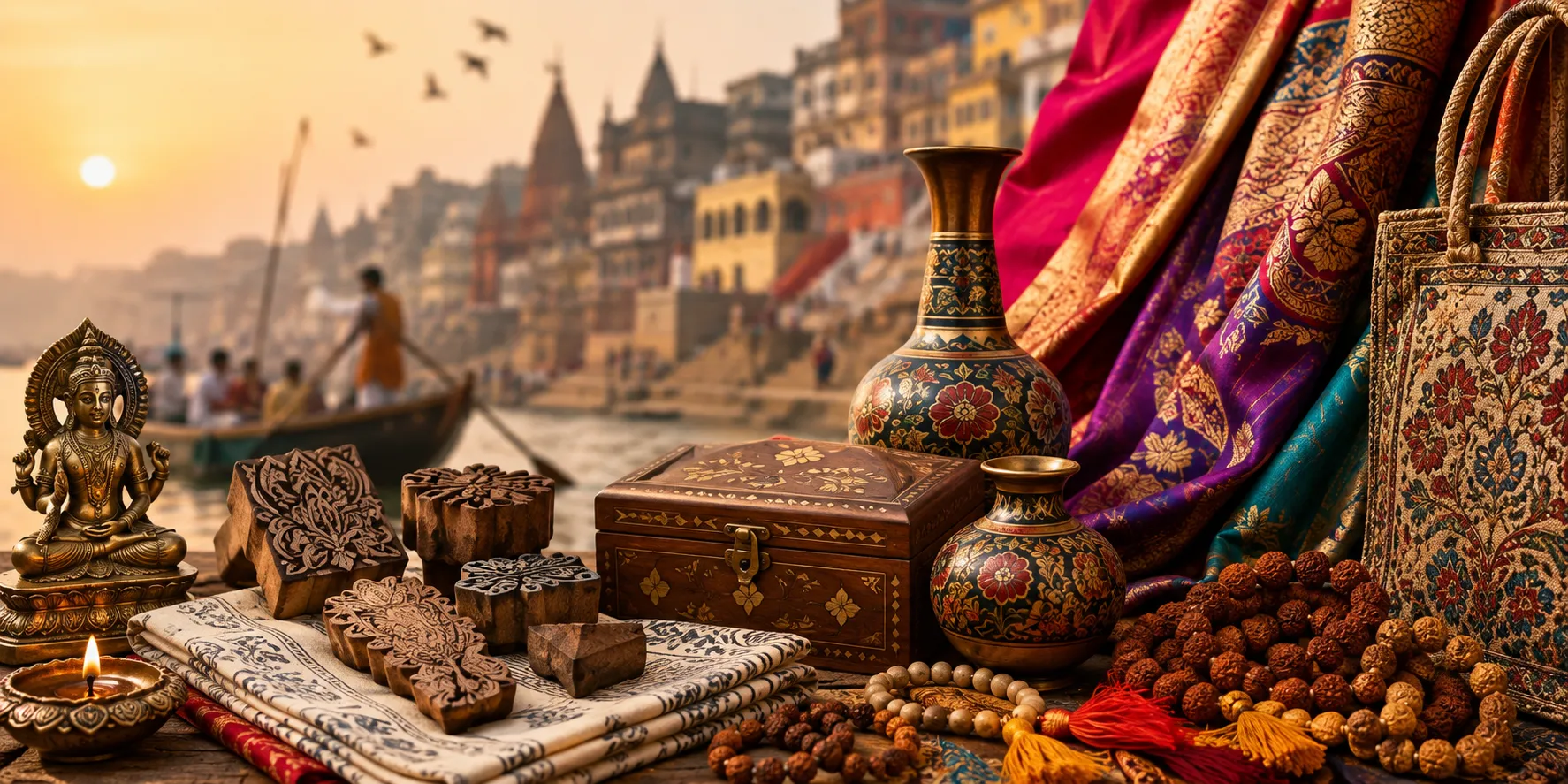
Varanasi isn't just ghats and temples. Walk five minutes into the old city and you'll hit a wall of shopfronts: silk spilling out of doorways, brass catching the light, the smell of attar drifting from a shop no bigger than a closet. Shopping here isn't a side activity, it's part of what the city is known for, and if you're wondering what to bring home, this list covers the famous things to buy in Varanasi, where locals actually buy them, and a few things to check before you pay. If you're still working out the rest of your trip, our Varanasi tour packages guide covers how to fit a shopping evening into your itinerary alongside the ghats and temples.
Famous Things to Buy in Varanasi
1. Banarasi Silk Sarees
The single most famous thing to buy in Varanasi. Woven with real silk and gold or silver zari, a genuine Banarasi saree can take anywhere from 15 days to several months to hand-weave, depending on the design. Prices range widely based on the weave (Katan, Organza, Tissue, Georgette) and how much zari work is involved. See the dedicated section below for exactly where to buy one and how to spot the real thing.
2. Banarasi Silk Dupattas and Suit Fabric
If a full saree isn't practical, dupattas, kurta fabric, and lehenga material in the same silk and zari work make lighter, easier souvenirs. They carry the same weaving quality at a fraction of the size and cost.
3. Rudraksha Beads and Malas
Rudraksha trees don't actually grow around Varanasi, but the city is one of the best places in India to buy genuine rudraksha malas, given its constant footfall of pilgrims and devotees. You'll find everything from simple single-bead malas to rarer varieties like Panch Mukhi (five-faced) rudraksha, mostly sold near Kashi Vishwanath Temple.
4. Brassware and Copper Items
Diyas, idols, ghee lamps, thalis, and copper water bottles are a Varanasi specialty, hand-hammered by artisans in a tradition that's been running for centuries. Thatheri Bazaar is the center of this trade and is recognized as a UNESCO intangible cultural heritage market.
5. Wooden Toys and Lacquerware
Brightly lacquered wooden toys, spinning tops, and small figurines are a GI-tagged craft unique to the region. They're lightweight, inexpensive, and make good gifts for kids.
6. Gulabi Meenakari Jewelry
A distinctive pink enamel-work jewelry style native to Varanasi, usually done on silver. It's less commonly known outside the city, which makes it a more original souvenir than standard jewelry.
7. Glass Beads and Bangles
Colorful glass bangles and bead jewelry are sold across almost every market in the old city, especially around Chowk and Godowlia, and are an easy, low-cost pickup.
8. Hand-Knotted Carpets and Durries
Varanasi has a long-standing carpet-weaving tradition, and hand-knotted rugs and durries are sold in wholesale quantities around Thatheri Bazaar and Peelikothi, often at better prices than you'd find in a typical home decor store.
9. Musical Instruments
Sitars, tablas, and flutes handmade by local craftsmen are worth seeking out if you're a musician or collector, though quality varies a lot between shops, so it's worth buying from an established instrument maker rather than a general souvenir stall.
10. Banarasi Paan
Less a souvenir, more a ritual, Banarasi paan is worth trying at least once even if you don't take any home. Betel leaf, areca nut, and a mix of sweet or spiced fillings, sold at small stalls all over the old city.
11. Malaiyo and Laal Peda
Malaiyo, a winter-only (October to February) saffron-and-cardamom milk foam dessert, and laal peda, a dense milk sweet, are two of the most distinctly Varanasi things to eat and gift. Sri Rajbandhu near Godowlia is well known for laal peda specifically.
12. Attars (Natural Perfumes)
Alcohol-free, oil-based perfumes made from flowers, wood, and spices. Varanasi has a small but genuine attar-making tradition, and a small bottle travels far better than most other souvenirs.
13. Ganga Jal (Holy Ganges Water)
For many Hindu visitors, carrying home a sealed bottle or copper container of Ganga jal is as important as anything else on this list. Sold in various sizes near almost every ghat.
14. Religious Idols and Puja Items
Small brass or stone idols, puja thalis, and prayer accessories are sold heavily around Kashi Vishwanath Temple and Vishwanath Gali, useful both as souvenirs and for anyone setting up a home puja space.
15. Books on Hinduism, Yoga, and Varanasi
A few old-city bookshops specialize in books on Hinduism, yoga, and Varanasi's own history, a good pickup if you'd rather bring back something to read than something to display.
Best Place to Buy Banarasi Saree in Varanasi
This is the one purchase most visitors plan around, so it's worth getting right. Here's where to actually go, based on what each market is known for:
| Market / Area | Best For |
|---|---|
| Vishwanath Gali | Widest variety, easy browsing |
| Thatheri Bazaar | Wholesale rates, authentic handloom |
| Peelikothi (Peeli Kothi) | Bulk buying, custom orders |
| Madanpura | Traditional weaving clusters |
| Alaipura | Buying directly from weavers |
| Government emporiums (UP Handloom, Banaras Bunkar Samiti) | Guaranteed authenticity, fixed pricing |
A few things worth knowing before you buy:
- Shops located right at or near Dashashwamedh Ghat tend to price 30 to 50 percent higher than the same saree a few lanes away, since they're catering to foot traffic rather than repeat local buyers.
- To check for real silk, look at the back of the saree. Handwoven pieces usually show slightly uneven threads; a perfectly uniform back often means machine-made.
- A genuine bridal-weight Banarasi with heavy zari work can take up to six months to hand-weave, so extremely low prices on "heavy work" pieces are usually a sign of machine-made silk or synthetic zari.
- Buying from a weaver's workshop directly, rather than a showroom, is commonly 30 to 60 percent cheaper for the same quality, though the trade-off is less variety in one place.
Best Markets for Shopping in Varanasi
- Vishwanath Gali: Silk, dupattas, wooden toys, religious items, right next to Kashi Vishwanath Temple.
- Thatheri Bazaar: Brassware and copper, plus wholesale sarees.
- Godowlia: The commercial center of the old city, a mix of everything from clothes to sweets to souvenirs.
- Chowk: One of the oldest markets, good for jewelry, bangles, and general shopping.
- Lahurabir: A more local, modern market, good for gifts and street food.
Tips for Shopping in Varanasi
- Most shops open around 10 AM and close by 9 PM; mornings and early evenings are less crowded than midday.
- If you're building shopping into a wider sightseeing day, timing your trip around the best time to visit Varanasi also means fewer crowds at the markets, not just the ghats.
- Carry cash. Smaller stalls and workshop-style sellers often don't accept cards.
- Bargaining is expected in most markets except government emporiums, where prices are fixed.
- Buy silk and rudraksha from established shops or certified outlets rather than roadside stalls, since both are commonly sold as "genuine" when they aren't.
- If you're short on time, a local guide can take you straight to the better-value lanes instead of the tourist-priced ones near the ghats.
"Planning your trip? Browse our Send Query to build a shopping evening into your itinerary."