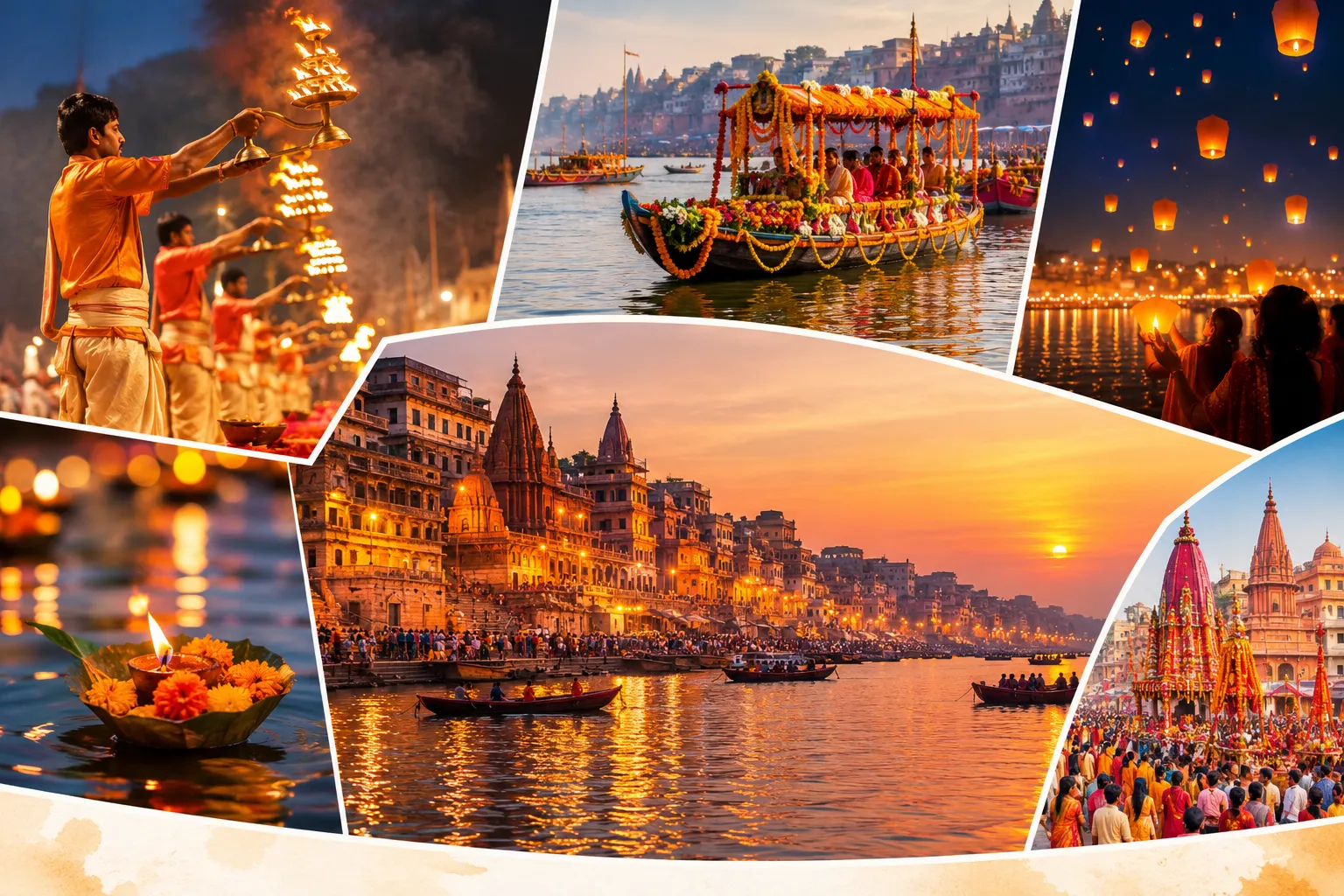
November is when Varanasi is at its most colourful, and also at its most crowded. In 2026, four major occasions arrive within three weeks: Diwali, Chhath Puja, Dev Uthani Ekadashi and Dev Deepawali. Each one changes how the ghats look, how the roads move and how hard it is to find a room.
If you are choosing travel dates, the week you pick matters more than the month. This guide lists the dates, explains what each week is like, and helps you decide. Want a hand with dates, stays and boat seats? Message us on WhatsApp and we will suggest the right window for your group.
Varanasi Festival Dates, November 2026
| Date | Occasion | What it means in Varanasi |
|---|---|---|
| Sunday, 8 Nov | Diwali | Lit-up lanes, temple crowds, local families out in the evening |
| Tuesday, 10 Nov | Govardhan Puja | Quieter day after the Diwali rush |
| Wednesday, 11 Nov | Bhai Dooj | Local family day; many shops close early |
| Fri 13 to Mon 16 Nov | Chhath Puja | Sunset and sunrise offerings on the ghats; main evening offering on Sunday, 15 Nov |
| Friday, 20 Nov | Dev Uthani Ekadashi | Chaturmas ends; wedding season opens |
| Saturday, 21 Nov | Tulsi Vivah | Temple and home ceremonies |
| Tuesday, 24 Nov | Kartik Purnima and Dev Deepawali | Peak night, lamps on the ghats |
Some calendars list Dev Uthani Ekadashi on Saturday, 21 November under the Vaishnava reckoning, so local priests may differ by a day. Throughout the month of Kartik, which runs until 24 November, many people take a pre-dawn Ganga bath and offer lamps at the ghats.
Week 1: Diwali Week (8 to 11 November)
Diwali in Varanasi feels warm and local. The city lights up, sweet shops are packed and families come out in the evening. The ghats are busy but nothing like Dev Deepawali night.
This week suits travellers who want festive energy without the biggest crowds. Boat rides and the evening aarti remain easy to plan. Read our guide on Diwali in Varanasi and how it differs from Dev Deepawali if you are deciding between the two.
Week 2: Chhath Puja (13 to 16 November)
Chhath is a major festival in Bihar and eastern Uttar Pradesh, and Varanasi sees large local gatherings. Families stand in the river at sunset and again at sunrise to offer arghya to the Sun. The ghats look striking, with baskets, fruit, sugarcane and glowing lamps.
For visitors, this is a special cultural experience. It also means the roads near Assi, Dashashwamedh and other ghats get crowded at the offering hours. Travel by train and road across the region is heavy, especially on the return leg after 16 November, so book tickets early and leave extra time for transfers. If you plan to watch, be respectful: keep distance, do not photograph families without asking, and avoid blocking the steps.
Week 3: The Quiet Gap (17 to 19 November)
This is the secret window. Chhath has finished, Dev Deepawali is still days away, and many visitors have already gone home. Rooms and boats are usually easier to find, and you still get festival-month atmosphere, the cooler weather and the early-morning Kartik bathing crowds.
If you want a calm first visit with temples, ghats, Sarnath and good food, this is the best value choice in November. Check our Varanasi weather in November guide to pack well for the cool mornings and evenings.
Week 4: The Build-Up (20 to 23 November)
Things start moving fast now. Dev Uthani Ekadashi on 20 November ends Chaturmas and opens the wedding season, so city hotels and taxis get busier for a second reason. The cultural Ganga Mahotsav is traditionally held in the days from Prabodhini Ekadashi to Kartik Purnima, so evenings may include music and dance programmes. Programme details are usually announced close to the date, so confirm before you plan around one.
This window is ideal if you want to see the ghats being prepared, enjoy cultural events and still have a little breathing room before the main night. Our Ganga Mahotsav Varanasi guide explains what the festival usually includes.
24 November: Dev Deepawali and Kartik Purnima
This is the highest-demand day of the year. On Kartik Purnima, the ghats are lined with lakhs of earthen lamps, and Ganga Aarti is held on a large scale. Kartik Purnima is also one of the most popular days for a holy dip in Varanasi. Guru Nanak Jayanti falls on the same date, which adds more visitors.
Expect packed ghats, vehicle restrictions from late afternoon, and rooms and boat seats that sell out early. If this is your main reason to visit, book weeks ahead and plan your movement on foot. You can see how we organise stays, boat seats and transfers on our Dev Deepawali packages page.
Which Week Should You Choose?
| If you want | Pick |
|---|---|
| The grandest lamps and aarti | 24 November, booked early |
| Festival energy with fewer crowds | 17 to 19 November |
| Local culture and river rituals | 13 to 16 November |
| A relaxed trip with easy boats | 17 to 19 November or the week after 24 November |
| Cultural programmes plus the main night | 22 to 24 November |
Practical Tips for a November Festival Trip
- Book early. Festival nights fill hotels, drivers and boats first.
- Choose a stay near the ghats. You will walk a lot, and vehicles are restricted in busy hours.
- Plan one main event per day. Crowds make it hard to do more.
- Carry light layers. Mornings on the water are cool.
- Keep your documents and phone charged. Networks slow down in big crowds.
- Respect rituals. Chhath, Kartik snan and the cremation ghats are sacred spaces, not photo sets.
Conclusion
November in Varanasi is not one festival, it is a whole season. Pick the week that matches your mood: Diwali for family warmth, Chhath for river culture, the quiet gap for value, or Dev Deepawali for the lamps. Whichever you choose, book early and leave time to walk.
If you want a planned trip with stays, boats, guides and transfers handled together, see our Varanasi tour packages or call us on +91 9506555541.